When your vehicle shows warning lights, unusual sounds, or reduced performance, having access to a local mechanic shop with advanced diagnostic tools makes all the difference. Recognizing the signs your vehicle needs a certified auto mechanic early can prevent serious damage. At Automotive Alignments and Calibrations, our team combines precise diagnostic technology with the expertise of an ASE-certified mechanic in North Hampton to identify the root cause of mechanical or electrical issues. These tools also play a key role in expert ADAS calibration services for modern vehicles. Whether you need a dependable car mechanic near you or a trusted mechanical repair shop, we provide clear guidance on the repairs your vehicle requires.
By using OEM parts whenever possible, along with high-quality aftermarket components when appropriate, we restore your vehicle’s performance and safety without unnecessary replacements. From routine inspections to complex engine, brake, or suspension diagnostics, our auto mechanic services focus on accuracy, efficiency, and transparency. You can trust that your vehicle will receive attention tailored to its exact needs, helping you drive confidently every day.
How Advanced Diagnostic Tools Improve Vehicle Repairs
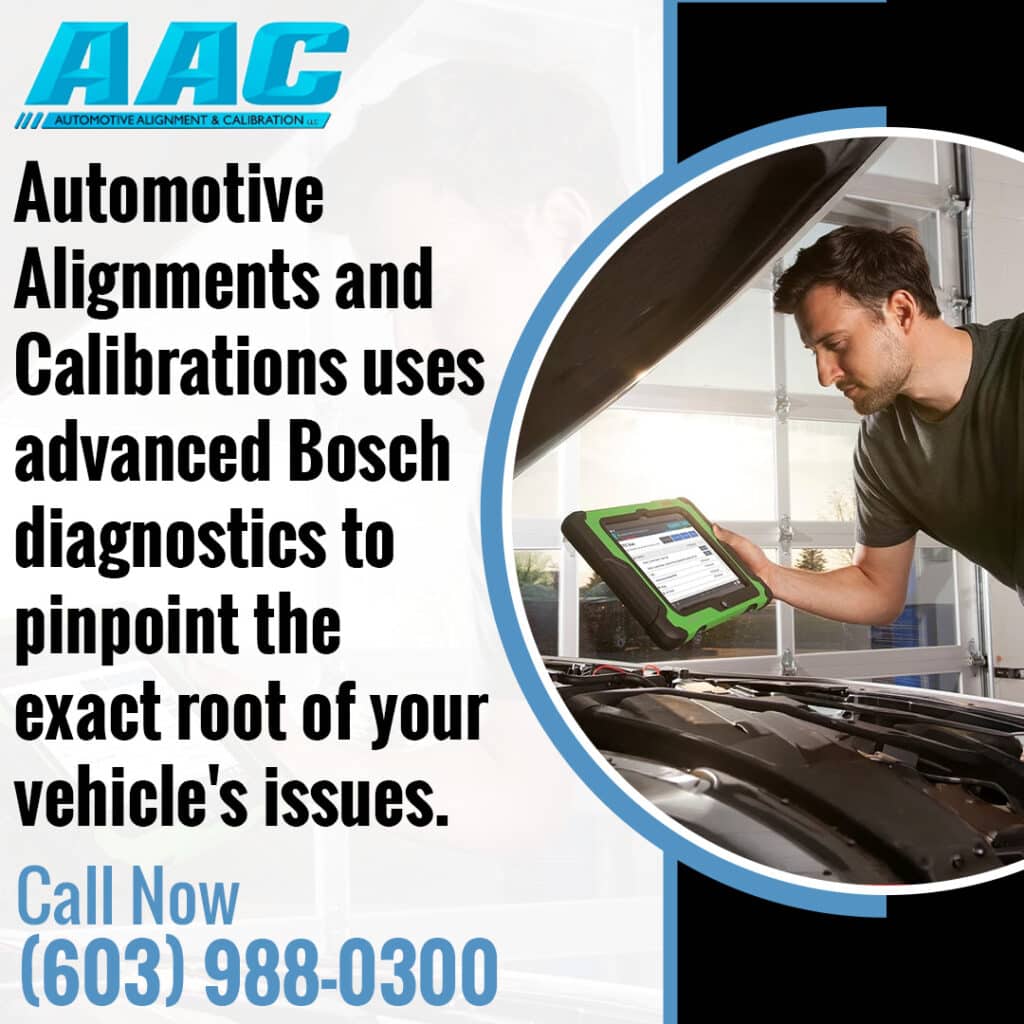
Advanced diagnostic tools identify vehicle issues quickly and accurately. At a mechanical repair shop, relying on visual inspection alone may overlook problems. Modern vehicles include interconnected systems like engine management, braking, suspension, and safety electronics. Using diagnostic tools allows an ASE-certified mechanic in North Hampton to pinpoint issues and reduce unnecessary part replacements or repeat visits to a mechanic shop.
How Diagnostic Tools Work
Diagnostic tools communicate with onboard computers, reading sensor and module data to reveal faults. This allows a car mechanic near you to locate problems efficiently.
Key uses include:
- Detecting engine misfires.
- Identifying ABS sensor issues.
- Tracing wiring problems that trigger dashboard alerts.
- Reviewing transmission or airbag error codes.
At Automotive Alignments and Calibrations, our auto mechanic team combines diagnostic tools with hands-on expertise to provide accurate repairs, maintain vehicle performance, and reduce downtime for every client.
What Are Onboard Diagnostic Systems (OBD)?
OBD systems monitor vehicle performance and record faults for analysis. These systems track data from critical components such as the engine, transmission, brakes, and other electronic modules. At a mechanical repair shop, reading this information allows an ASE-certified mechanic to address issues quickly and accurately.
How OBD Systems Work
OBD systems communicate with scan tools to provide live data and fault codes. This information gives a car mechanic a clear picture of the vehicle’s condition, helping guide repairs that target the actual problem rather than relying on guesswork.
Common ways OBD data is used include:
- OBD-II codes identify engine misfires or emission system faults.
- Live readings from oxygen and coolant sensors to track performance in real time.
- Stored fault codes reveal recurring issues that require follow-up.
- Transmission or ABS codes highlight problems in electronic control systems.
Using OBD systems, an auto mechanic can confirm issues before replacing parts unnecessarily, saving time and cost. Our team applies these diagnostic readings to plan accurate repairs and maintain vehicle performance.
How Live Data and Fault Codes Work Together
Live data displays current system performance, while fault codes record past errors. Combining both gives a clear picture of your vehicle’s condition. At an auto repair garage, this approach allows an ASE-certified mechanic to identify whether a fault is ongoing or historical.
Using Live Data and Fault Codes
Reading fault codes alone can show a previous issue, but live data confirms if it continues to affect performance. This helps a car mechanic target repairs precisely and avoid replacing parts that are still functioning correctly.
Common applications include:
- Identifying which engine cylinder is misfiring in real time.
- Monitor brake sensor activity while driving to check system responsiveness.
- Observing transmission shifts to detect delayed or irregular responses.
- Verifying coolant and oxygen sensor readings to track engine efficiency under load.
By analyzing live data alongside stored fault codes, a mechanic can provide more accurate diagnostics. At Automotive Alignments and Calibrations, this method allows our team to complete repairs effectively and maintain the performance and safety of your vehicle.
Core Diagnostic Tools in a Repair Shop
Diagnostic tools allow precise identification of vehicle issues. At an auto repair garage, these systems give an ASE-certified mechanic the information needed for accurate repairs and efficient service.
Digital Scan Tools
Digital scan tools read fault codes and system data. They help a car mechanic identify issues in the engine, transmission, or electrical systems quickly.
Manufacturer-Specific Diagnostic Tools
OEM diagnostic systems access brand-specific codes, enabling precise adjustments and calibrations for vehicles from Ford, Toyota, GM, and more.
Calibration and Sensor Alignment Tools
These tools align sensors after repairs affecting safety or handling, such as suspension work or windshield replacement.
Using these diagnostic tools allows a local mechanic shop to reduce unnecessary replacements and focus repairs on actual problems. We rely on these tools to maintain vehicle performance, safety, and reliability.
The Diagnostic Process at a Mechanical Repair Shop
Diagnostics follow a structured process to identify vehicle issues accurately. At a mechanical repair shop, a systematic approach helps an ASE-certified mechanic locate problems efficiently, reducing unnecessary repairs and part replacements.
At Automotive Alignments and Calibrations, the process begins by connecting diagnostic tools to access fault codes and live system data, giving insight into engine performance, braking systems, electrical circuits, and other modules.
Next, the mechanic inspects components to confirm the source of the issue and plan repairs precisely. Repairs often use OEM parts whenever possible, with high-quality aftermarket components based on insurance coverage.
A follow-up scan verifies that all systems function correctly before the vehicle leaves the shop.
Key steps include:
- Retrieving fault codes and live data.
- Inspecting affected systems.
- Identifying the root cause.
- Performing repairs with OEM or high-quality aftermarket parts.
- Running a follow-up scan.
This approach allows a mechanic shop to deliver reliable, accurate repairs.
How Diagnostics Support Specific Repairs
Diagnostics pinpoint the source of vehicle issues for precise repairs. At a vehicle service center in North Hampton, diagnostic tools help an ASE-certified mechanic identify problems quickly, reducing unnecessary part replacement and repeated visits.
Brake Repairs
Diagnostics find brake system faults before parts are replaced, allowing a car mechanic near you to target repairs efficiently. Common uses include detecting ABS module errors, identifying hydraulic leaks, and replacing brake sensors only when needed.
Suspension and Alignment Repairs
Diagnostics reveal misaligned or worn suspension components affecting handling. An auto mechanic can address uneven tire pressure, worn struts, and confirm alignment after part replacement without replacing parts unnecessarily.
Electrical System Repairs
Diagnostics trace wiring faults, battery issues, and module errors at a local mechanic shop. This approach locates dashboard warning causes, battery drains, and faulty sensors, preventing repeated repairs.
Using diagnostics, Automotive Alignments and Calibrations delivers targeted repairs that improve safety, performance, and reliability while avoiding unnecessary replacements.
Parts Usage Guided by Diagnostics
Advanced diagnostics help identify which parts truly need replacement. At a mechanical repair shop, a local mechanic can use this data to perform precise repairs while reducing unnecessary replacements. An ASE-certified mechanic in North Hampton relies on these tools to guide decisions efficiently.
Parts selection process:
- Use OEM parts whenever possible, depending on insurance coverage.
- Select high-quality aftermarket components when OEM parts are unavailable or not covered.
- Prioritize critical systems like brakes, suspension, and ignition for OEM replacements whenever feasible.
Combining diagnostics with thoughtful parts selection allows a car mechanic near you or an auto mechanic team to deliver repairs that maintain safety, performance, and long-term reliability without replacing unnecessary components.
Why Diagnostics Reduce Repeat Repairs
Diagnostics target the root cause of vehicle problems rather than just the symptoms. At a vehicle service center, this approach allows an ASE-certified mechanic to perform repairs efficiently and reduce unnecessary part replacements.
By using diagnostic tools, a car mechanic can track issues across multiple systems, avoiding repeated attempts to fix the same problem. This saves time, reduces costs, and maintains consistent vehicle performance.
How diagnostics prevent repeat repairs:
- Identify electrical system faults before replacing multiple components.
- Detect engine performance issues, such as ignition or fuel system problems.
- Confirm brake system errors before performing part replacements.
We combine diagnostic data with hands-on expertise to repair vehicles accurately, reducing repeat visits and supporting long-term reliability.
When Diagnostic Testing is Recommended
Diagnostic testing is recommended whenever warning lights appear or unusual vehicle behavior occurs. At an auto repair garage in North Hampton, this allows an ASE-certified mechanic to identify issues before they develop into more complex problems.
By performing early diagnostic testing, a car mechanic can prevent further wear on your vehicle’s engine, brakes, suspension, or electrical systems. This approach helps avoid repeated repairs and reduces time spent on trial-and-error fixes.
Situations that often call for diagnostic testing:
- Illuminated check engine or ABS warning lights.
- Engine stalling, rough idling, or loss of power.
- Steering vibration, uneven braking, or unexpected sensor alerts.
We combine diagnostic tools with hands-on experience to detect issues promptly, providing accurate repairs and maintaining vehicle performance over time.
Advanced Diagnostics at Automotive Alignments and Calibrations
We use advanced OEM scan tools and Bosch diagnostic systems to identify vehicle issues accurately. Our technicians provide clear explanations, helping you understand the repairs needed and how they affect your vehicle’s performance.
By combining technology with hands-on inspection, an ASE-certified mechanic in North Hampton can address engine, transmission, and electrical concerns efficiently. This approach also applies to brake and suspension evaluations, as well as sensor calibration and ADAS verification.
Services offered through advanced diagnostics include:
- Engine, transmission, and electrical system analysis
- Brake and suspension system evaluations
- Sensor calibration and ADAS functionality checks
OEM parts are used whenever possible, supplemented by high-quality aftermarket components based on insurance coverage. At this local mechanic shop, our team focuses on repairs precisely, reducing unnecessary part replacements and maintaining long-term vehicle performance.
Choosing a Mechanical Repair Shop in North Hampton
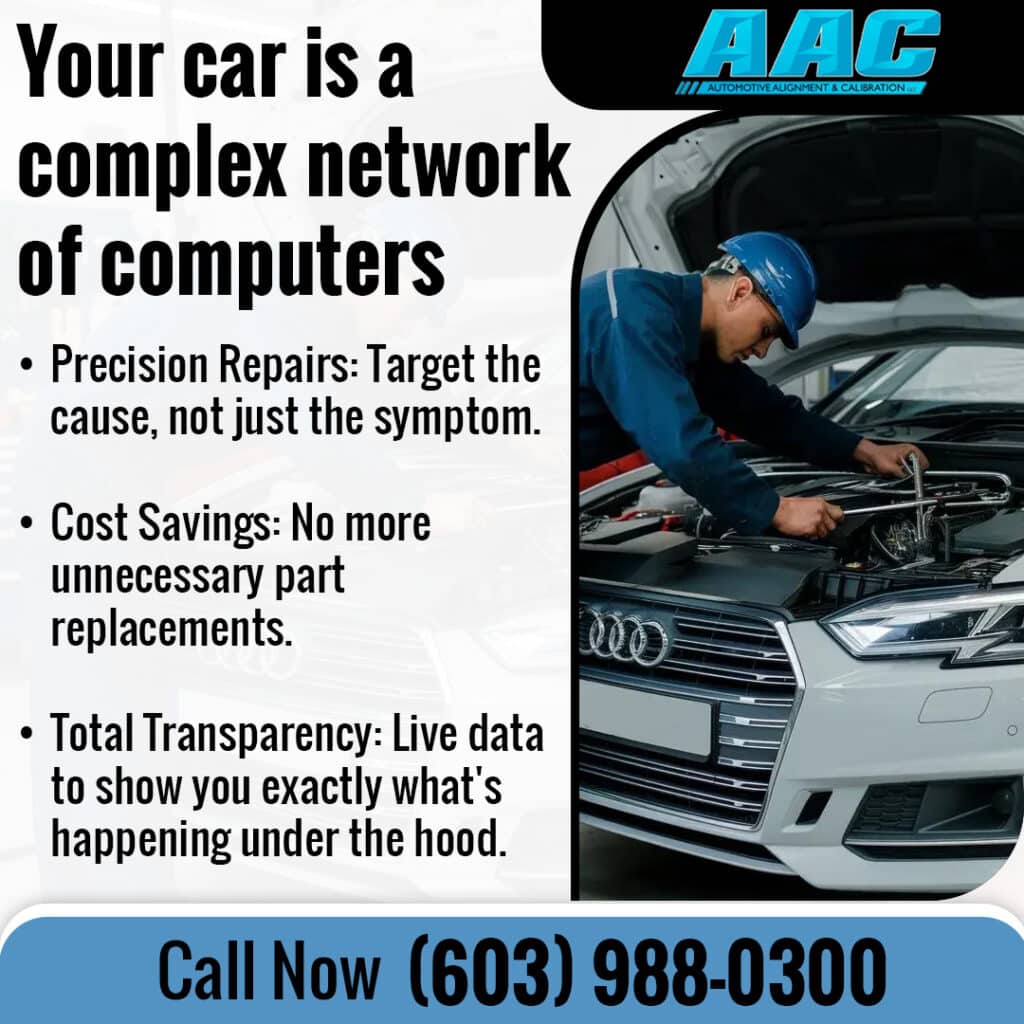
Selecting a local mechanic shop with advanced diagnostic capabilities helps you address vehicle issues quickly and accurately. At a mechanical repair shop, having access to modern diagnostic tools allows an ASE-certified mechanic to pinpoint problems that might otherwise go unnoticed.
This approach benefits you by providing faster issue detection and transparent repair recommendations. It also reduces the chances of repeat repairs, saving time and cost while maintaining vehicle performance.
Advantages of choosing a shop with advanced diagnostics include:
- Early detection of engine, brake, or suspension issues
- Clear explanation of necessary repairs from a car mechanic
- Verification of electrical and safety systems after service
At Automotive Alignments and Calibrations, our team combines experience with advanced tools to deliver reliable, precise repairs for every vehicle.
Schedule Your Diagnostic Service Today
Don’t wait for warning lights or unusual vehicle behavior to become a bigger problem. At Automotive Alignments and Calibrations, our team of ASE-certified mechanics in North Hampton uses advanced diagnostic tools to identify issues quickly and provide precise repairs. Whether you need a dependable car mechanic or a trusted local mechanic shop, we are ready to help.
Call us today at (603) 988-0300 or email us at aacofnh@gmail.com to schedule your appointment. Let our team evaluate your vehicle, restore performance, and keep it running safely and reliably.