Vehicle issues often start with small changes in handling, sound, or performance that drivers notice but cannot fully explain. For a comprehensive breakdown, see the top 10 vehicle issues fixed by our certified auto mechanics. These early signs often point to deeper mechanical or electronic problems that require proper inspection. In some cases, they also indicate that your car’s ADAS safety system may need recalibration. A certified auto mechanic in North Hampton, NH, identifies these issues through structured diagnostics, system testing, and physical inspection to confirm what your vehicle actually needs.
At Automotive Alignments and Calibrations, you work with a local mechanic who focuses on accurate diagnosis and clear repair decisions rather than guesswork. When you search for a car mechanic, you need technicians who understand both modern vehicle systems and practical repair methods. We evaluate each concern carefully using diagnostic tools and hands-on inspection to keep your vehicle safe, stable, and reliable on the road.
Vehicle Symptoms Should Never Be Ignored Without Verification
You should not rely only on visible symptoms because modern vehicles store internal fault data that often differs from what you feel while driving.
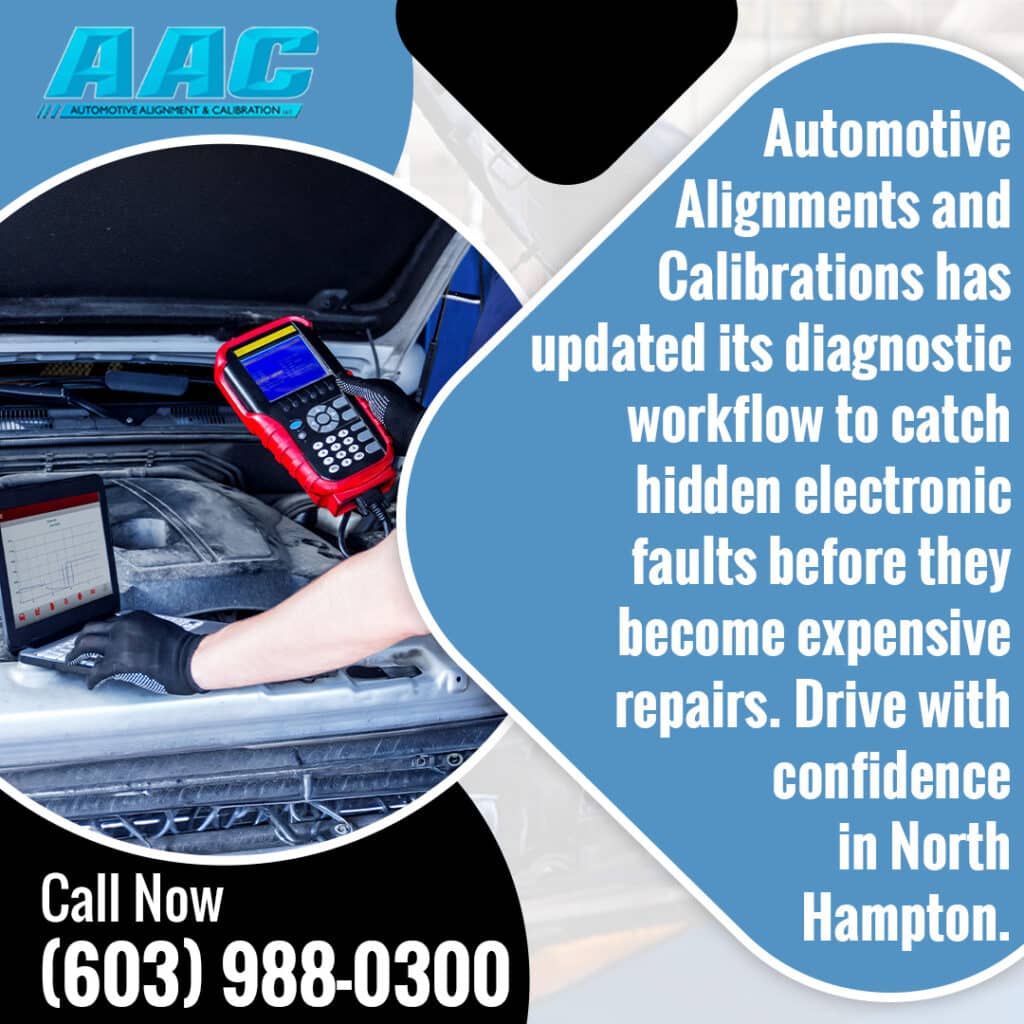
Today’s vehicles use electronic control modules that record system performance across engine, steering, and braking systems. These records can show faults even when the vehicle still seems normal. A certified auto mechanic checks both stored data and physical conditions to identify the real issue.
At a local mechanic shop, technicians start with diagnostic scanning to read fault codes before inspection begins.
Key points include:
- Faults may be stored without dashboard warnings
- Issues can appear only under certain driving conditions
- Some problems return even after temporary resets
A car mechanic uses this data to guide accurate repair decisions. Automotive Alignments and Calibrations follow this process to confirm issues before service work begins.
Changes in Driving Behavior Often Signal Early Mechanical Issues
Changes in how a vehicle responds during driving often point to an early imbalance within the engine, steering, or suspension systems.
A certified auto mechanic reviews these changes because they often appear before major faults develop. At a local mechanic shop, technicians compare driver feedback with diagnostic data to locate the source of the issue.
Reduced acceleration response
Reduced acceleration response often relates to fuel delivery or sensor input issues.
Common signs include:
- Delay when pressing the accelerator pedal
- Uneven power during uphill driving
- Reduced response under load
Steering drift during driving
Steering drift often indicates alignment or suspension imbalance.
Common signs include:
- Vehicle drifting on straight roads
- Steering wheel not returning to center
- Uneven steering response at low speed
A car mechanic near you checks these conditions using diagnostics and inspection.
Automotive Alignments and Calibrations uses this process to identify early issues accurately.
Brake Changes Indicate Wear or Hydraulic Inconsistency
Brake system changes often point to wear in friction components or pressure imbalance within the hydraulic system.
A certified auto mechanic checks brake behavior because it directly affects stopping performance. At a mechanical repair shop, technicians inspect pads, rotors, and hydraulic flow using diagnostics and physical testing.
Brake pedal vibration
Brake pedal vibration often comes from uneven rotors or caliper pressure issues.
Common signs include:
- Pulsation during braking at moderate speeds
- Uneven stopping force across wheels
- Changes in pedal resistance
Extended stopping distance
The extended stopping distance shows reduced braking efficiency in the system.
Common signs include:
- Longer time to stop
- Delayed braking response
- Soft brake pedal feel
A car mechanic evaluates brake fluid, components, and wear patterns.
We use this process to identify brake issues accurately.
Tire Wear Patterns Reflect Alignment and Suspension Condition
Tire wear patterns reflect how alignment and suspension systems interact with the road during driving.
A certified auto mechanic inspects tire condition because it reveals early signs of mechanical imbalance. At a mechanical repair shop, tire checks are paired with suspension and steering inspections to locate the root cause of uneven wear.
Uneven tread wear
Uneven tread wear often points to alignment issues affecting wheel positioning.
Common signs include:
- Inner edge wear on front tires
- Outer shoulder wear on rear tires
- Uneven tread depth across the axle
An auto mechanic checks alignment angles and suspension conditions before recommending adjustments. A car mechanic may also test handling behavior on the road.
Tire feathering
Tire feathering indicates inconsistent suspension movement.
Common signs include:
- Rough tread edges
- Low-speed road noise
- Steering vibration at higher speeds
We use this inspection process to identify mechanical issues accurately.
Diagnostic Systems Identify Hidden Vehicle Faults
Diagnostic systems read fault data stored inside vehicle control modules that may not appear during normal driving.
A certified auto mechanic uses diagnostic tools to access internal system data before starting repairs. At a mechanical repair shop, scan results help separate electronic faults from mechanical issues.
Modern vehicles store data across engine, braking, and steering systems. A car mechanic reviews this information to locate irregular patterns.
OEM scan tools
OEM scan tools retrieve manufacturer-specific fault codes from vehicle systems.
Common readings include:
- Engine misfire codes
- System performance issues
- Sensor communication faults
Bosch diagnostic equipment
Bosch equipment measures system performance under controlled testing conditions.
Common tests include:
- Brake pressure variation
- Steering angle calibration
- Electrical circuit checks
We use these diagnostics to support accurate repair decisions and confirm vehicle condition.
Mechanical Inspection Confirms System Condition
Mechanical inspection checks the physical condition of vehicle parts after diagnostic scans identify possible issues.
A certified auto mechanic uses this step to confirm what scan data suggests. At a mechanical repair shop, technicians move from electronic readings to hands-on inspection to verify wear and function.
Brake pad thickness measurement
Brake pad thickness shows remaining friction material and braking condition.
Checks include:
- Pad material level on each wheel
- Even wear across the axle
- Rotor contact surface condition
Suspension joint movement testing
Suspension testing checks the movement and stability of key joints.
Checks include:
- Ball joint play
- Control arm stability
- Shock and strut response
Tire surface wear evaluation
Tire wear shows alignment and suspension condition.
Checks include:
- Uneven tread depth
- Edge wear patterns
- Surface irregularities
Automotive Alignments and Calibrations uses this process to confirm repair needs accurately.
Repair Process Follows Structured Diagnostic Steps
Repair work follows a step-by-step process that links driver feedback, diagnostic scanning, and physical inspection before any service begins.
A certified auto mechanic uses this process to separate symptoms from confirmed faults. At a mechanical repair shop, each stage helps narrow down the real issue before repair recommendations are made. A car mechanic starts with driver input, then moves into system scanning and inspection.
Customer Concern Review
Driver-reported symptoms guide the diagnostic direction.
Common concerns include:
- Noise during braking or turning
- Steering instability at highway speeds
- Repeated dashboard warnings
Electronic Scanning
Scan tools retrieve fault codes from vehicle systems.
Common results include:
- ABS alerts
- Engine misfire codes
- Stability control faults
Physical Inspection
Inspection checks the actual component condition.
Includes:
- Suspension wear
- Brake rotor condition
- Tire alignment
Final Testing
Final testing confirms repair results through road evaluation and system checks.
Our shop follows this process to support accurate repair outcomes.
Local Mechanic Shop Services Support Vehicle Reliability
Local mechanic shop services support consistent vehicle performance through timely repair, inspection, and maintenance based on real driving conditions.
A certified auto mechanic in North Hampton, NH, works with drivers who depend on their vehicles daily. At a mechanical repair shop, service focuses on early detection of issues before they affect other systems. A car mechanic near you helps maintain stability through regular inspections and repairs.
Faster Response for Issues
Quick response limits further system strain.
- Braking changes
- Steering instability
- Performance loss
Regular Inspection Scheduling
Routine checks track wear patterns over time.
- Alignment changes
- Suspension wear
- Brake condition
Local Driving Conditions
Local roads affect wear and performance.
An auto mechanic considers weather, traffic, and road conditions during service.
We apply this process to support reliable vehicle service in North Hampton, NH.
Visiting a Car Mechanic Near You Becomes Necessary Under Specific Conditions
Visiting a car mechanic near you becomes necessary when vehicle issues continue after basic maintenance and begin affecting driving performance.
A certified auto mechanic reviews these conditions using diagnostic tools and physical inspection. At a local mechanic shop, technicians check both system data and component condition to locate the source of the issue.
Repeated Dashboard Warnings
Ongoing warning lights indicate unresolved system faults.
- Engine light returns after reset
- ABS alerts during driving
- Stability warnings appear repeatedly
Loss of Steering Control
Steering changes affect vehicle stability.
- Vehicle pulls to one side
- Delayed steering response
- Off-center steering wheel
Brake Response Inconsistency
Brake changes affect stopping behavior.
- Uneven braking force
- Soft pedal feel
- Longer stopping distance
We use this process to guide repair work accurately.
Automotive Alignments and Calibrations Service Approach
Automotive Alignments and Calibrations provides mechanical repair, alignment correction, and diagnostic services in North Hampton, NH, based on structured inspection and system data review.
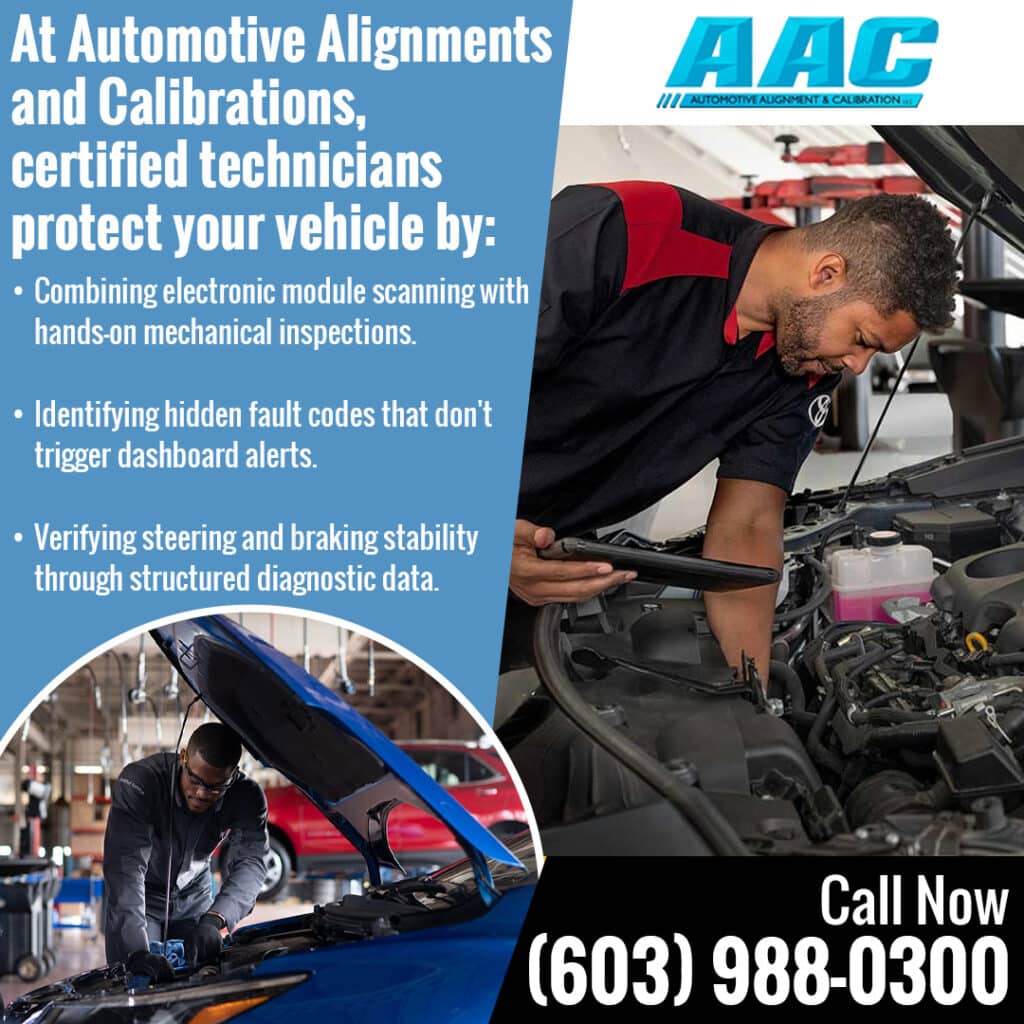
As a local mechanic shop, the service approach focuses on identifying the exact condition of each vehicle before any repair work begins. A certified auto mechanic in North Hampton, NH, evaluates system performance, mechanical wear, and diagnostic results to guide repair decisions with clarity.
At a mechanical shop, each vehicle is handled through a step-by-step process that connects driver feedback with technical findings. A car mechanic relies on this method to maintain consistency across different repair types.
Service Focus Areas
- Engine and mechanical diagnostics
- Brake system repair and service
- Suspension and steering repairs
- Tire alignment and replacement
Each service area is reviewed through both scan data and physical inspection. An auto mechanic then matches findings with system conditions before recommending repair actions.
Service decisions depend on diagnostic output, inspection results, and parts availability based on insurance coverage. OEM parts are used whenever possible, while high-quality aftermarket parts are used where OEM options are not available or not covered.
A certified auto mechanic identifies vehicle issues through diagnostic scanning, physical inspection, and system verification before any repair work begins.
Our shop follows this structured approach to mechanical repair, combining OEM parts whenever possible with reliable aftermarket options when required. This process supports accurate service delivery for drivers visiting a mechanical repair shop in North Hampton, NH.
Schedule Your Vehicle Inspection Today
If your vehicle shows changes in performance, handling, or braking, have it checked.
At Automotive Alignments and Calibrations, you receive clear diagnostics, detailed inspection, and straightforward repair recommendations based on actual vehicle condition.
Call (603) 988-0300 to schedule your service or request an inspection.
Email aacofnh@gmail.com for inquiries or appointments.
Get your vehicle checked by a local team focused on accurate diagnostics and reliable mechanical repair.