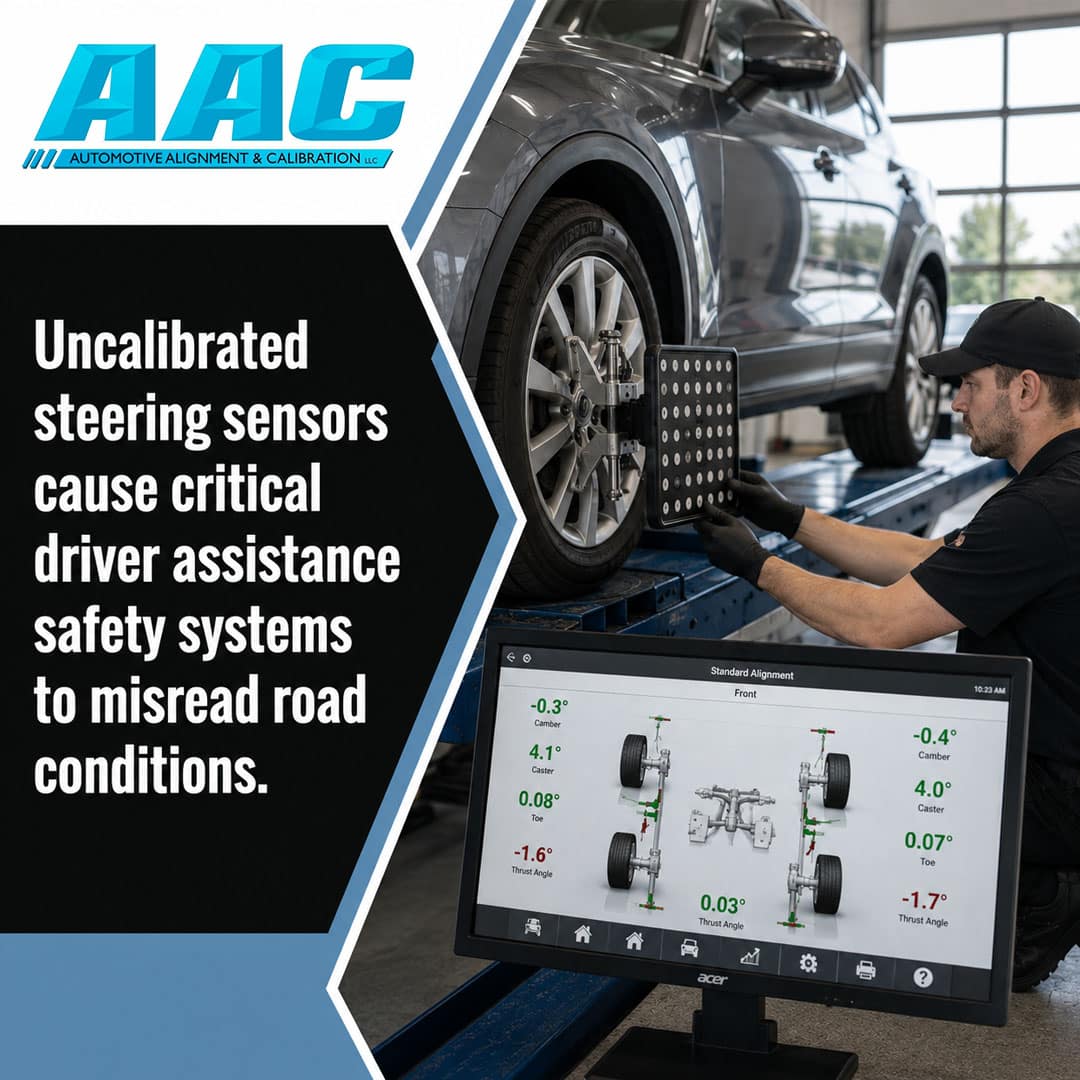
Steering calibration in NH resets your vehicle’s steering angle sensor so it matches the wheels’ true center position after work has shifted them. This sensor feeds safety systems such as lane keeping assist, stability control, and adaptive cruise control, and most current vehicles need it whenever an alignment or steering repair is performed. Skipping it leaves those systems reading outdated position data. We at Automotive Alignments and Calibrations build this step into every applicable service, rather than treating it as optional.
What Is Steering Calibration?
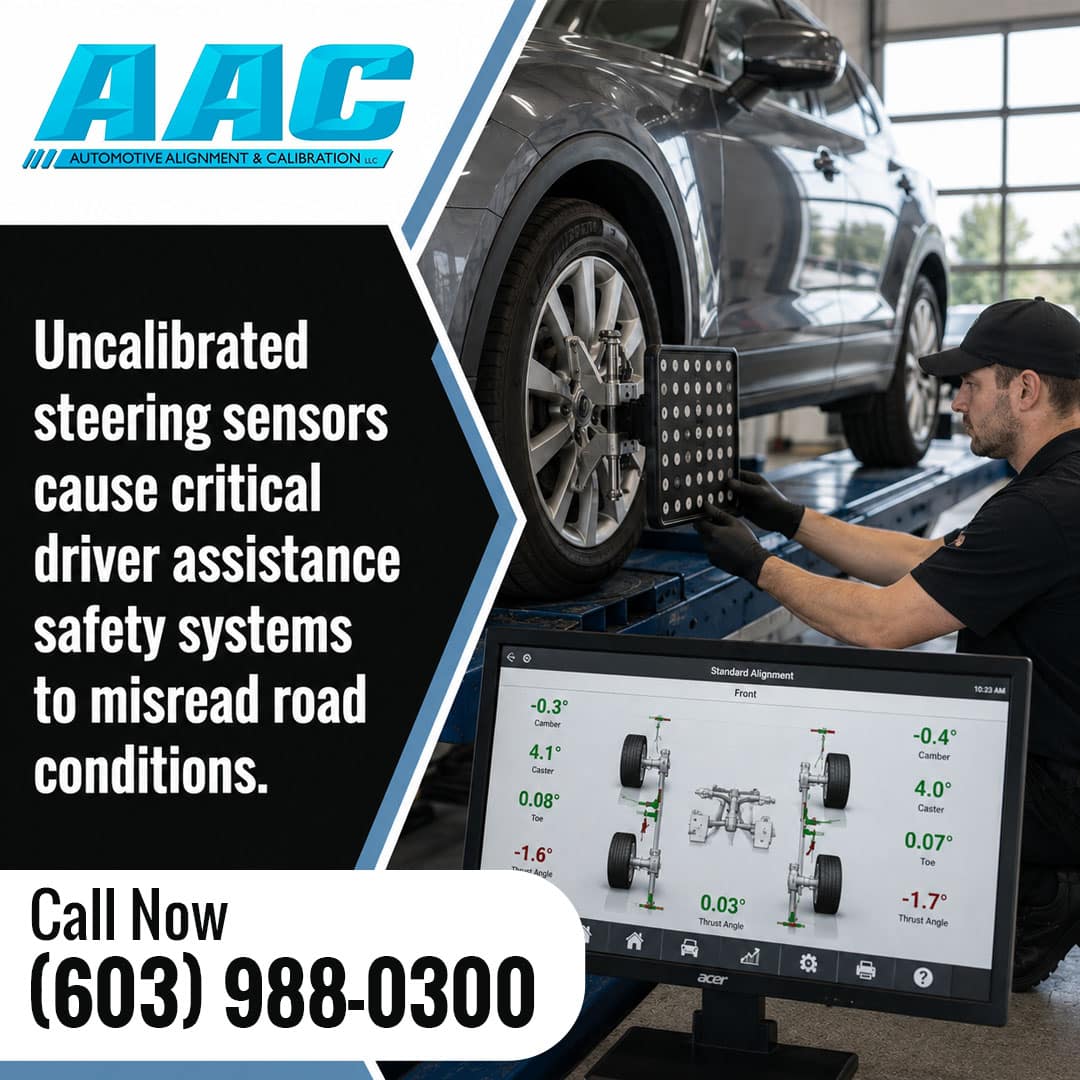
Steering calibration syncs the steering angle sensor with your front wheels’ actual position. The sensor sits near the steering column and reports wheel position to your vehicle’s computer many times per second.
A wheel alignment shifts the wheels slightly to correct their angles, so the sensor then needs resetting to true center, or it keeps reporting an outdated position.
Why Does Calibration Matter for NH Drivers?
New Hampshire’s frost heaves, potholes, and seasonal temperature swings put steady stress on steering and suspension parts, and more vehicles now carry driver assistance features that depend on sensor accuracy.
NHTSA reports 39,254 people died in motor vehicle crashes across the U.S. in 2024, and driver assistance technologies are designed to help reduce crashes tied to human error. The Insurance Institute for Highway Safety separately found vehicles with front automatic braking and forward collision alert were involved in 43% fewer rear-end crashes than the same models without those systems.2 Those systems only work as tested when the sensor feeding them is accurate, which is the goal behind our ADAS calibration services in North Hampton.
How Is Steering Calibration Different From Wheel Alignment?
| Factor | Wheel Alignment | Steering Calibration |
| What it adjusts | Camber, caster, and toe angles | The steering angle sensor’s zero point |
| What it fixes | Uneven tire wear, pulling, handling | Sensor accuracy feeding ADAS systems |
| Equipment used | Alignment rack and angle gauges | OEM scan tools and calibration targets |
Because the two are linked on most vehicles, our alignment and calibration services pair them by default.
What Happens During Calibration?
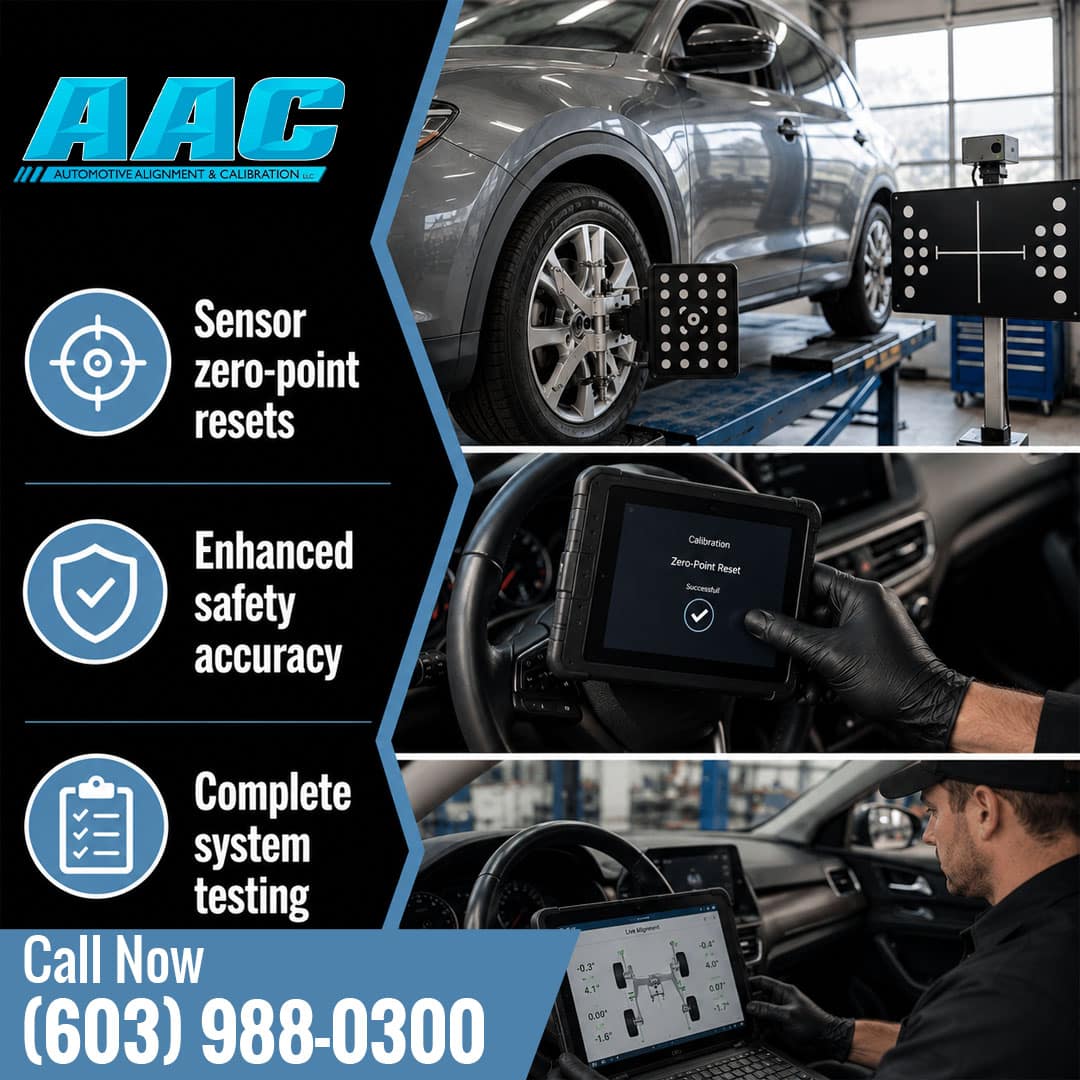
At Automotive Alignments and Calibrations, our ASE-certified technician follows this sequence:
- Connect an OEM-level scan tool to read sensor values
- Center the steering wheel and confirm wheel position
- Reset the steering angle sensor to true center
- Calibrate any linked ADAS cameras or radar units
- Road test and rescan to confirm accuracy
We use OEM parts whenever possible, based on what a customer’s insurance allows, paired with our Bosch diagnostic equipment to keep results accurate to factory specs.
FAQs
- Will insurance help cover steering calibration?
When calibration is tied to a covered repair, we work directly with your insurance company and explain what’s covered before any work begins.
- How long does a steering calibration take at your shop?
Most calibrations finish the same day as your alignment. We reset the sensor with OEM-level scan tools, then road test the vehicle to confirm ADAS systems read correctly.
- Is steering calibration covered under warranty?
Yes. Like all labor performed at our shop, steering calibration is covered by our 3-month or 3,000-mile labor warranty, whichever limit is reached sooner.
Schedule Your Steering Calibration in NH
Automotive Alignments and Calibrations serves North Hampton and the Seacoast area with steering calibration built into our alignment and calibration services. We also work alongside our partner shop, Committed Collision & Auto Body, which has served the Seacoast region for more than 20 years, so collision-related calibrations get the same accuracy. Call (603) 988-0300 or email aacofnh@gmail.com to schedule your free estimate.