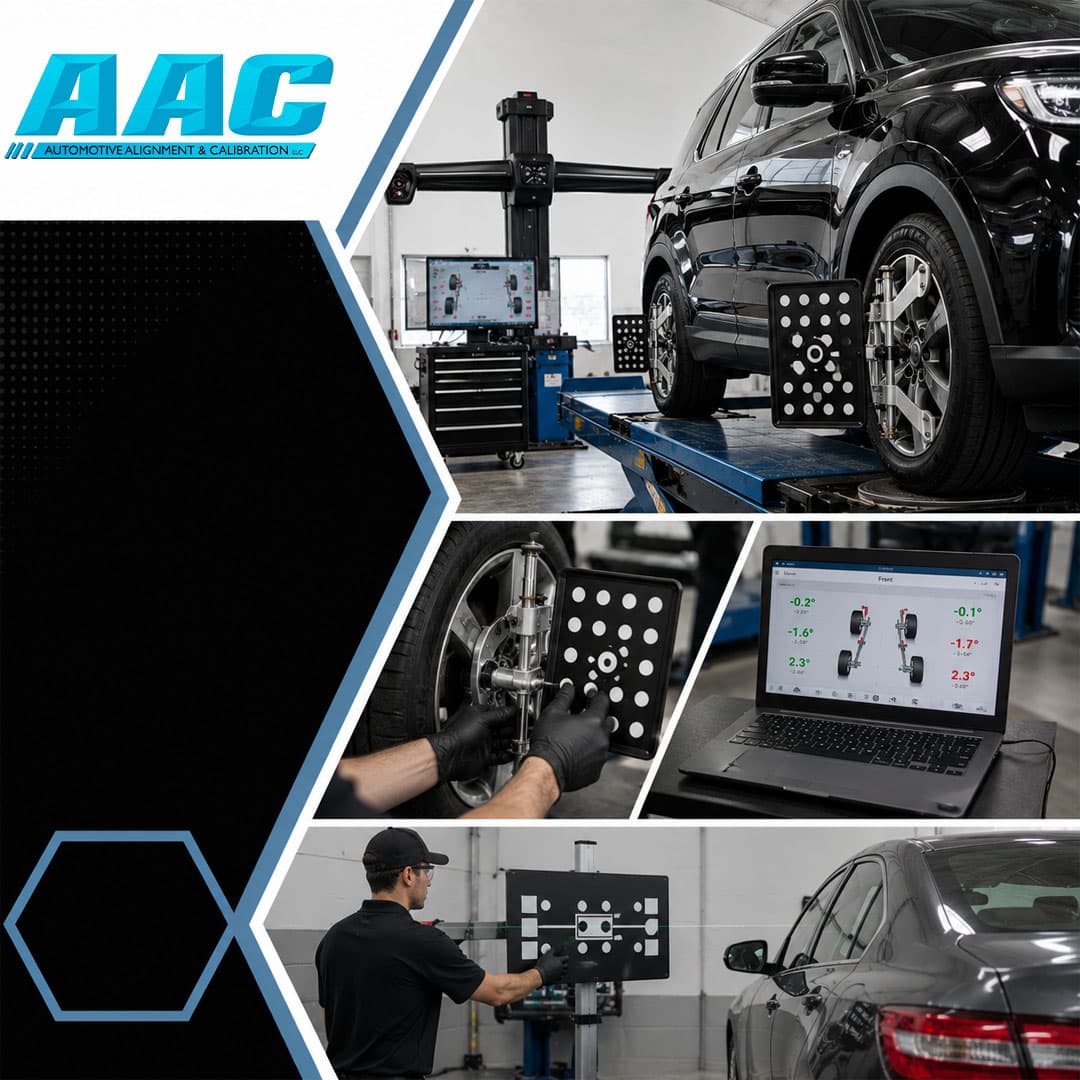
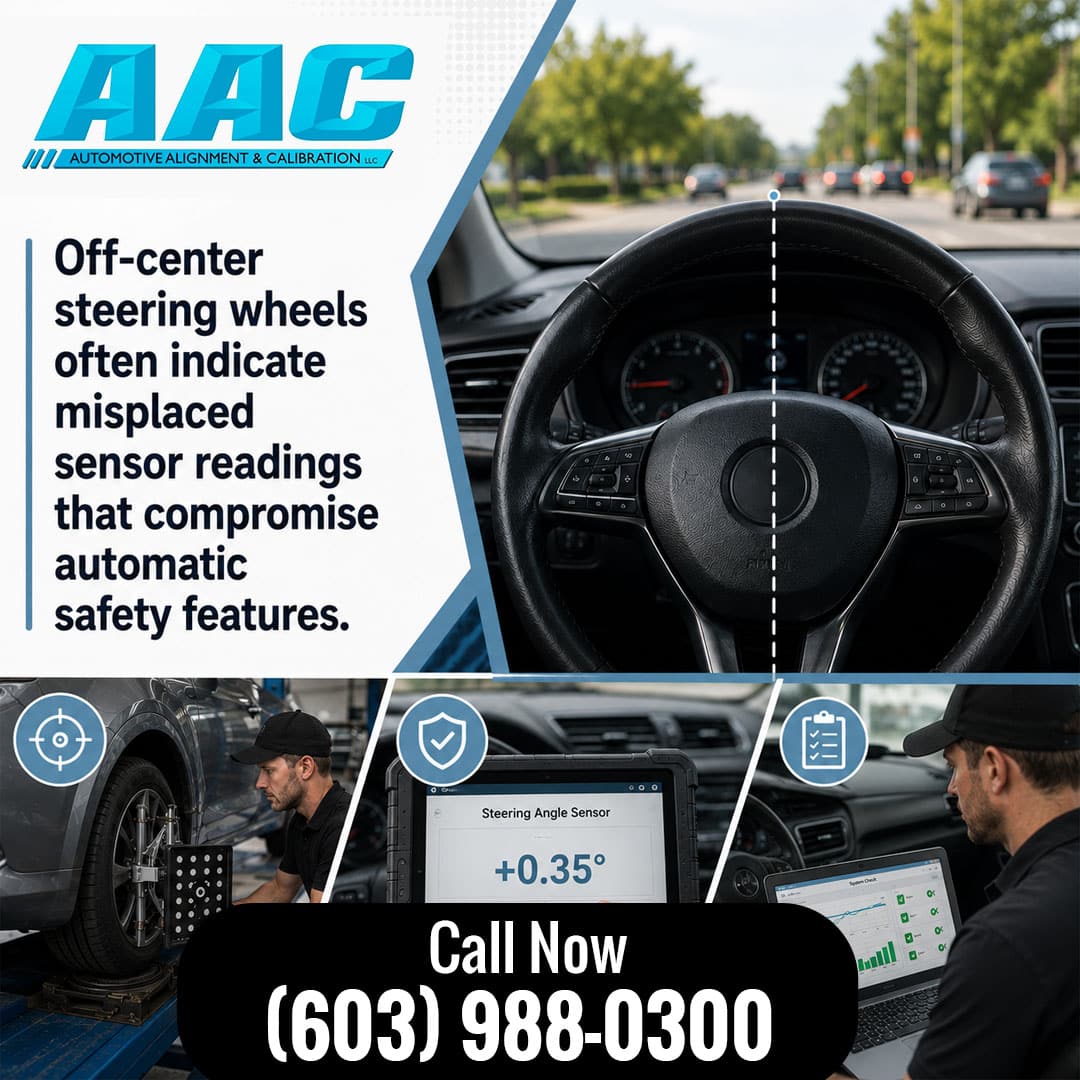
Most drivers notice that steering calibration is needed when the steering wheel sits off-center while driving straight or an ADAS warning light appears. Calibration may also be needed after a wheel alignment, suspension repair, windshield replacement, or collision repair. These events shift the steering angle sensor’s reference point away from the wheels’ true position. We at Automotive Alignments and Calibrations check for these signs during every applicable service instead of waiting for a customer to notice a problem.
What Are the Warning Signs You Need Steering Calibration?
A few signals point to a sensor that’s out of sync with your wheels:
- The steering wheel is crooked when the vehicle is driving straight
- A lane keeping, forward collision, or adaptive cruise control warning light appears
- The vehicle pulls slightly even after a wheel alignment in North Hampton, NH
- Backup camera or blind spot alerts behave inconsistently
Any one of these on its own is worth a look, and more than one at a time usually means the sensor needs attention soon.
Which Repairs and Services Trigger the Need for Recalibration?
| Trigger | Why It Affects the Sensor |
| Wheel alignment | Shifts the wheels’ angle relative to the sensor’s stored position |
| Windshield replacement | Removes and remounts the forward-facing camera |
| Suspension or steering repair | Changes the steering system’s mechanical reference point |
| Collision or bumper repair | Can move radar units or cameras out of factory position |
Because collision repairs are a common trigger, it helps that Automotive Alignments and Calibrations is the sister company of Committed Collision, which has served the Seacoast region for more than 20 years, so vehicles coming out of bodywork can have their sensors checked as part of our alignment and calibration services.
What Happens If You Ignore These Signs?
Skipping calibration doesn’t just affect comfort. The National Highway Traffic Safety Administration notes that driver assistance technologies are designed to help reduce crashes tied to human error, and many of these systems rely on the same forward-facing camera and radar hardware that calibration corrects. Separately, the Insurance Institute for Highway Safety found that lane departure warning lowers rates of single-vehicle, sideswipe, and head-on crashes by 11%. That kind of benefit depends on the underlying sensor reading the road correctly, which is what calibration restores after it’s been disturbed.
FAQs
- Can a mechanic tell if my steering calibration is off without a warning light?
Yes. Our ASE-certified technician checks the steering angle sensor’s values with an OEM-level scan tool and our Bosch diagnostic equipment, since some sensors drift out of range before triggering a dash warning.
- Does a new set of tires ever require steering calibration?
It depends on the tire size and whether the wheels were removed and reinstalled during the swap. If you’re getting new tires through our ADAS calibration services in North Hampton, ask us to check the sensor reading at the same time to confirm nothing shifted.
- If I notice a warning light, can I keep driving until my appointment?
Call ahead and mention the warning light so we know to check the sensor when you arrive. We already carry the OEM-level scan tools needed to look into it as part of your visit.
Schedule Your Steering Calibration in NH
If your steering wheel feels off-center or a safety system light has come on, Automotive Alignments and Calibrations can check the steering angle sensor and correct it as needed. Call (603) 988-0300 or email aacofnh@gmail.com to schedule your free estimate.