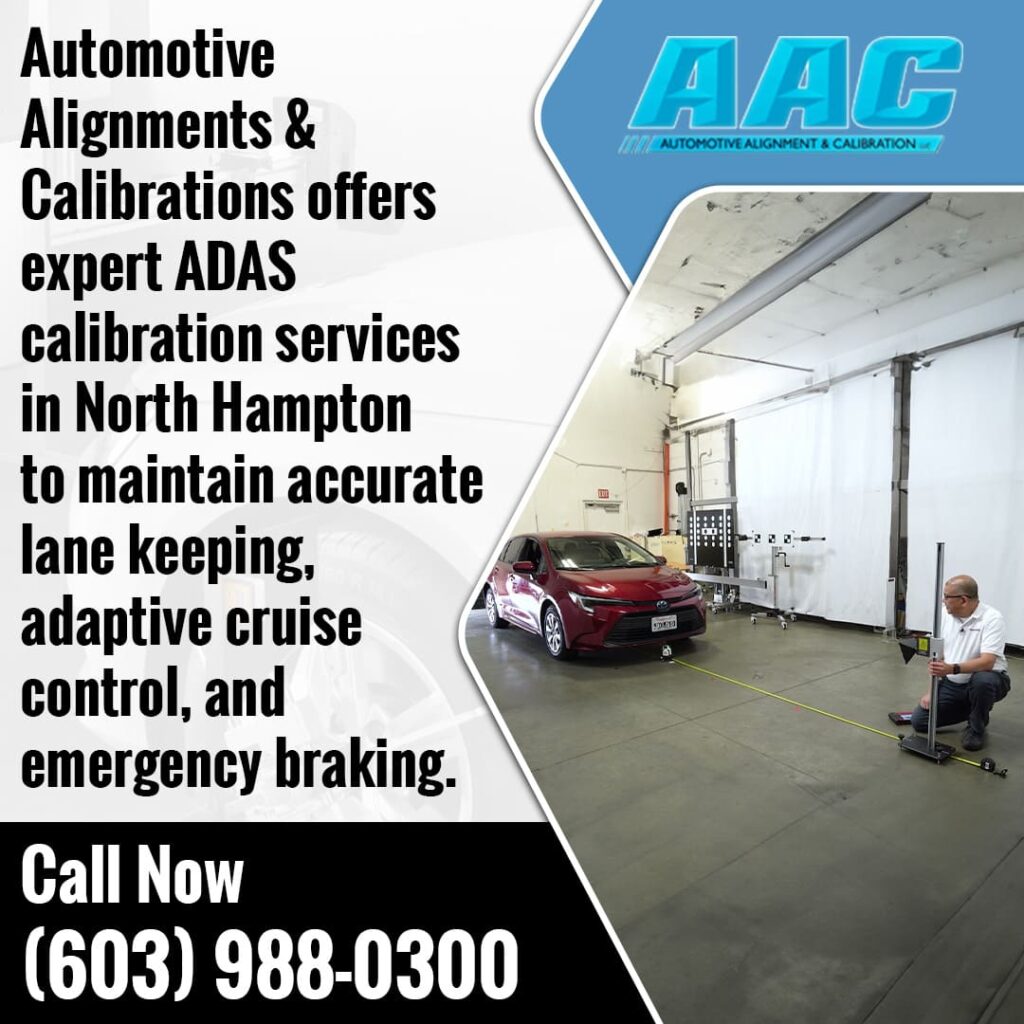
When your vehicle’s safety systems trigger warnings or behave unexpectedly, it often points to misaligned wheels or uncalibrated sensors. At Automotive Alignments and Calibrations, we provide precise wheel alignment and ADAS calibration in North Hampton to keep your vehicle performing safely and reliably. Our alignment and calibration services address steering issues, sensor misalignments, and mechanical adjustments, helping your advanced driver assistance systems operate correctly.
We also offer steering calibration to correct wheel angles after repairs or suspension adjustments, which provides features like lane keeping and adaptive cruise control that respond accurately. Our ADAS calibration services in North Hampton restore sensor accuracy after collisions, tire replacements, or suspension work, giving you confidence behind the wheel. With a focus on precision, clear communication, and the use of OEM parts whenever possible, we help drivers maintain the performance and safety of modern vehicles.
How ADAS Systems Support Safe Driving
ADAS systems help you drive more safely by monitoring your vehicle and the surrounding conditions.
Advanced Driver Assistance Systems (ADAS) include features like lane departure warnings, forward collision alerts, adaptive cruise control, and parking assistance. These systems rely on precise sensor alignment to operate correctly, and any misalignment can affect their performance.
The Role of Sensor Accuracy
Sensors track your car’s position and surroundings to guide safety features.
When wheels, steering components, or suspension are adjusted, sensors may shift slightly. Even small deviations can cause warnings to activate unnecessarily or prevent safety features from responding correctly.
Examples of ADAS issues caused by misalignment:
- Lane keeping assist may fail after suspension repairs, causing slight drifting.
- Adaptive cruise control can misjudge the distance to the car ahead if the radar calibration is off.
- Automatic emergency braking may trigger unexpectedly when sensors detect misaligned surfaces.
Maintaining ADAS Performance
Professional calibration supports consistent ADAS operation:
- Wheel alignment corrects angles that affect sensor accuracy.
- ADAS calibration adjusts cameras, radar, and lidar after repairs or replacements.
- Steering calibration restores proper wheel alignment to maintain system accuracy.
Real-World Impact
Properly calibrated ADAS improves everyday driving:
- Lane tracking feels stable and precise.
- Adaptive braking and cruise control respond consistently.
- Sensor alerts are accurate, reducing false warnings.
We apply advanced calibration methods and use OEM parts whenever possible, complemented by high-quality aftermarket parts when needed. Their combination of alignment and calibration services helps drivers rely on safety systems confidently after repairs or maintenance.
Why Wheel Alignment Affects ADAS Performance
Wheel alignment impacts both vehicle handling and the accuracy of ADAS sensors.
Proper alignment keeps your wheels, steering, and suspension angles within the manufacturer’s specifications. Misalignment can lead to uneven tire wear, reduced fuel efficiency, and inaccurate readings from ADAS systems.
Key Alignment Angles
Three main angles influence handling and sensor accuracy:
| Alignment Angle | Function | Impact on ADAS |
| Toe | Direction wheels point relative to the centerline | Incorrect toe can trigger steering alerts and affect lane keeping |
| Camber | Tilt of the wheels inward or outward | Misaligned camber affects lane assist and adaptive cruise responsiveness |
| Caster | Forward or backward tilt of the steering axis | Incorrect caster can reduce stability and interfere with steering calibration |
How Misalignment Affects ADAS
Sensors depend on proper wheel and steering geometry to perform accurately.
- Front wheel misalignment can reduce the precision of lane-keeping systems.
- Rear-wheel misalignment may compromise parking sensors and collision alerts.
- Steering angle deviations can trigger dashboard warnings or disable certain ADAS features.
Maintaining Alignment for Reliable ADAS
Routine alignment checks support consistent ADAS performance.
- Regular wheel alignment keeps sensor readings accurate.
- Steering calibration after suspension or tire work restores proper vehicle dynamics.
- Combining alignment with ADAS calibration services in North Hampton provides reliable operation of lane assist, adaptive cruise, and automatic braking.
Automotive Alignments & Calibrations applies professional alignment and calibration methods using OEM parts whenever possible, along with high-quality aftermarket components when needed. This approach keeps ADAS features functioning accurately and supports smooth, predictable handling for your vehicle.
Steering Calibration and Safety
It keeps your wheels and vehicle sensors aligned for accurate responses.
After repairs, suspension work, or minor collisions, steering components can shift. Proper calibration restores accurate handling and helps ADAS features, including lane keeping, adaptive cruise control, and automatic emergency braking, function reliably.
How Steering Misalignment Affects Safety
Even small changes in steering geometry can impact your vehicle’s safety features:
- A misaligned steering wheel may cause lane assist to drift.
- Torque sensor offsets can interfere with stability control systems.
- Incorrect steering calibration may trigger false ADAS warnings on the dashboard.
Maintaining Accurate Steering
Professional calibration supports consistent vehicle performance and sensor reliability:
- Calibration of steering corrects angles after suspension adjustments or repairs.
- Combined with wheel alignment in North Hampton, NH, it maintains proper handling and reduces uneven tire wear.
- Including ADAS calibration restores sensor accuracy for lane assist, adaptive cruise, and emergency braking systems.
Automotive Alignments & Calibrations applies careful steering and ADAS calibration methods using OEM parts whenever possible, supplemented by high-quality aftermarket components as needed. This combination helps your vehicle respond accurately to driver inputs and safety system commands, keeping daily driving predictable and safe.
Alignment and ADAS Calibration Services
We deliver precise alignment and calibration services to maintain vehicle handling and safety.
These services address wheel geometry, steering angles, and ADAS sensor positions to keep your vehicle responsive and its safety systems functioning correctly.
Core Services
The shop provides a range of alignment and calibration solutions:
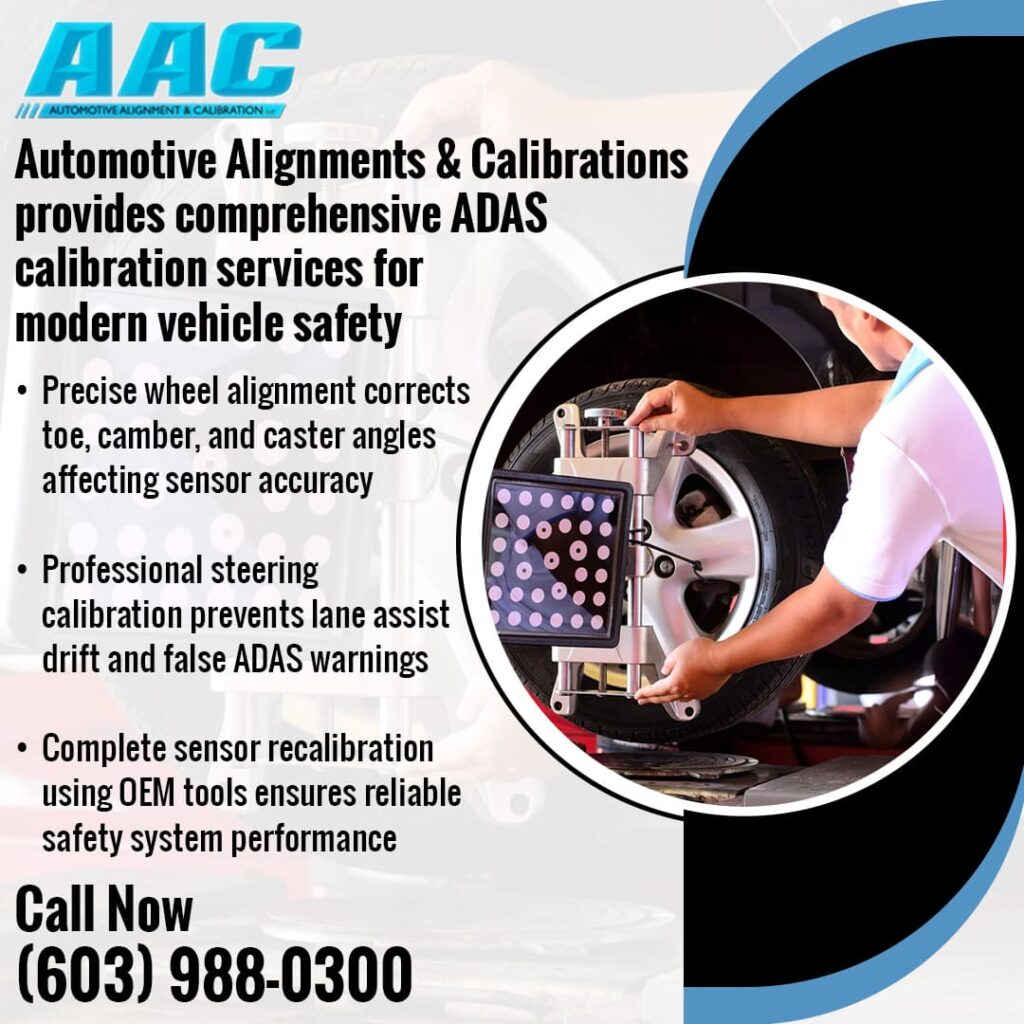
- Wheel alignment restores proper toe, camber, and caster angles.
- Calibration of the steering corrects steering angles after suspension work or repairs.
- ADAS calibration services in North Hampton adjust sensors, cameras, and radar for lane keeping, adaptive cruise, and emergency braking systems.
Parts and Equipment
The dealer uses high-quality components to support performance:
- OEM parts are applied whenever possible, based on insurance coverage.
- High-quality aftermarket parts are selected when OEM components are unavailable or not required, maintaining safety and reliability.
- Advanced diagnostic tools verify that sensors and steering components align accurately.
Benefits of Professional Alignment and Calibration
Accurate alignment and calibration provide practical advantages for everyday driving:
- Smooth, predictable handling and responsive steering.
- Reliable ADAS alerts and functions.
- Reduced tire wear and extended component lifespan.
Automotive Alignments & Calibrations combines technical skill, calibrated tools, and carefully selected parts to deliver alignment and calibration services that maintain vehicle safety and system accuracy.
Step-by-Step ADAS Calibration Process
ADAS calibration restores vehicle safety and sensor accuracy through a structured process.
Following precise steps helps maintain accurate lane keeping, adaptive cruise, and emergency braking functions.
1. Vehicle Inspection
Technicians begin by examining all relevant components:
- Steering and suspension systems for any shifts or damage.
- Wheels for alignment irregularities.
- ADAS sensors, including cameras, radar, and lidar, for position accuracy.
2. Mechanical Adjustments
Next, adjustments correct steering and alignment angles:
- Toe, camber, and caster are aligned to manufacturer specifications.
- Steering components are recalibrated after any suspension or mechanical repair.
- This step helps prevent uneven tire wear and supports accurate sensor readings.
3. Sensor Calibration
Sensors are then recalibrated using specialized tools:
- OEM calibration tools are used whenever possible.
- High-quality aftermarket tools are applied if OEM options are unavailable or restricted by insurance coverage.
- Cameras, radar, and lidar are aligned to their exact factory specifications.
4. Testing and Verification
Finally, technicians confirm system performance under real driving conditions:
- Test drives assess lane keeping, adaptive cruise control, and emergency braking.
- Alerts and sensor responses are monitored to verify accuracy.
- Any minor adjustments are made to achieve consistent system function.
Automotive Alignments & Calibrations follows this step-by-step approach for ADAS calibration in North Hampton, combining wheel alignment and sensor recalibration. This process keeps your vehicle handling predictable and safety systems reliable.
When Drivers Should Schedule Calibration
Drivers should schedule ADAS calibration after any repairs or if system alerts appear.
Prompt calibration keeps safety systems like lane keeping, adaptive cruise control, and automatic braking responsive and accurate.
Situations That Require Calibration
- After a collision: Even minor accidents can shift wheels or sensors.
- Following suspension or steering repairs: Adjustments may alter alignment angles, affecting sensor readings.
- Tire or wheel replacement: New tires or rims can influence wheel alignment and ADAS performance.
- Warning lights or system alerts: Any dashboard alerts related to lane departure, adaptive cruise, or stability control indicate calibration may be needed.
Benefits of Regular Calibration
- Maintains consistent lane assist performance.
- Prevents adaptive cruise from misjudging distances.
- Reduces uneven tire wear caused by misalignment or steering shifts.
We recommend scheduling alignment and calibration services promptly to keep your vehicle’s handling precise and ADAS systems functioning reliably.
Local Expertise in North Hampton
Local technicians deliver precise and dependable calibration services.
Our ASE-certified professionals are familiar with North Hampton’s driving conditions and how they influence wheel alignment, steering performance, and ADAS functionality.
How Local Knowledge Supports Vehicle Performance
- Steering recalibration for seasonal suspension adjustments: Roads in the region can create unique wear patterns on suspension and steering components.
- Tire inspections specific to local road conditions: Potholes, gravel surfaces, and coastal weather can affect alignment and sensor accuracy.
- On-site verification of ADAS sensor performance: Cameras, radar, and lidar sensors are tested under local driving scenarios to confirm responsiveness.
Benefits of Working with Local Experts
- Faster scheduling and service response.
- Practical insight into conditions that impact ADAS and wheel alignment in North Hampton, NH.
- Reliable calibration and alignment services that keep vehicles safe and responsive.
Automotive Alignments & Calibrations applies this local expertise to provide ADAS calibration in North Hampton and steering calibration tailored to your vehicle’s needs.
Maintaining ADAS Accuracy Between Services
Regular inspections keep ADAS features responsive and reliable.
You can maintain your vehicle’s advanced safety systems by monitoring indicators like warning lights, tire wear, and steering behavior. Consistent checks help identify small issues before they affect performance.
Practical Steps to Maintain ADAS Accuracy
- Software updates for lane assist systems: Updates can modify sensor parameters or enhance system behavior.
- Alignment checks every 12,000 miles: Routine wheel alignment prevents uneven tire wear and maintains correct sensor readings.
- Sensor recalibration after suspension or wheel changes: Any modifications to steering or suspension may shift sensor positions, requiring adjustment.
Benefits of Proactive Maintenance
- Keeps steering calibration and ADAS features functioning correctly.
- Reduces the likelihood of false alerts from collision warning or lane departure systems.
- Supports long-term performance of calibration and alignment services.
Automotive Alignments & Calibrations recommends following these practices to maintain ADAS calibration and protect your vehicle’s handling and safety.
Schedule Your ADAS and Alignment Services Today
Keep your vehicle’s safety systems accurate and your steering responsive with alignment and calibration services from Automotive Alignments & Calibrations. Our ASE-certified technicians provide precise wheel alignment in North Hampton, NH, ADAS calibration in North Hampton, and steering calibration using OEM parts whenever possible, supplemented with high-quality aftermarket components when needed.
Call us now at (603) 988-0300 or email aacofnh@gmail.com to schedule your appointment. Let our team help maintain your vehicle’s performance and safety with trusted alignment and calibration services designed for modern vehicles.