Our ASE-certified auto mechanic uses OEM scan tools and Bosch diagnostic equipment to identify vehicle problems accurately. These tools can retrieve diagnostic trouble codes (DTCs) stored by a vehicle’s onboard diagnostic system. In the U.S., OBD II has been required on most 1996 and newer passenger cars and light-duty vehicles.
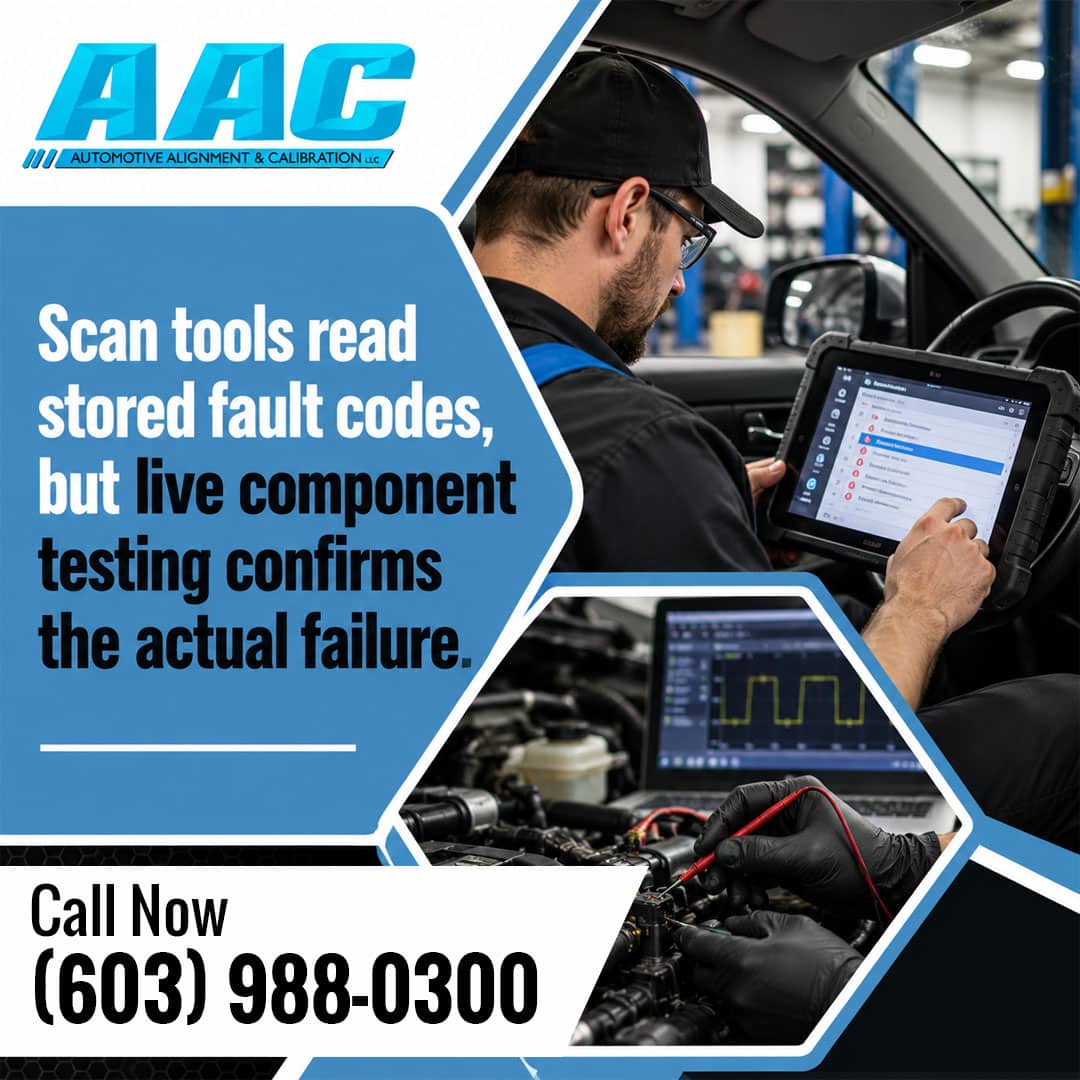
Reading a code is only the start of the diagnostic process. Repair recommendations follow a full diagnostic review before any parts are replaced. At Automotive Alignments and Calibrations, this equipment is used as part of the diagnostic process before any repair is quoted.
What Is an OEM Scan Tool and Why Does It Matter?
An OEM scan tool connects directly to a vehicle’s onboard diagnostic port to read stored fault codes. Nearly all 1996 and newer vehicles are required to have this port, according to the California Air Resources Board. A single scan typically retrieves:
- The fault code stored by the vehicle’s computer
- The vehicle system where the fault was detected
- Basic vehicle data tied to that code
The scan tool translates that stored data into a code a technician can act on. At a mechanical repair shop, this step usually comes before any part is touched.
What Role Does Bosch Diagnostic Equipment Play?
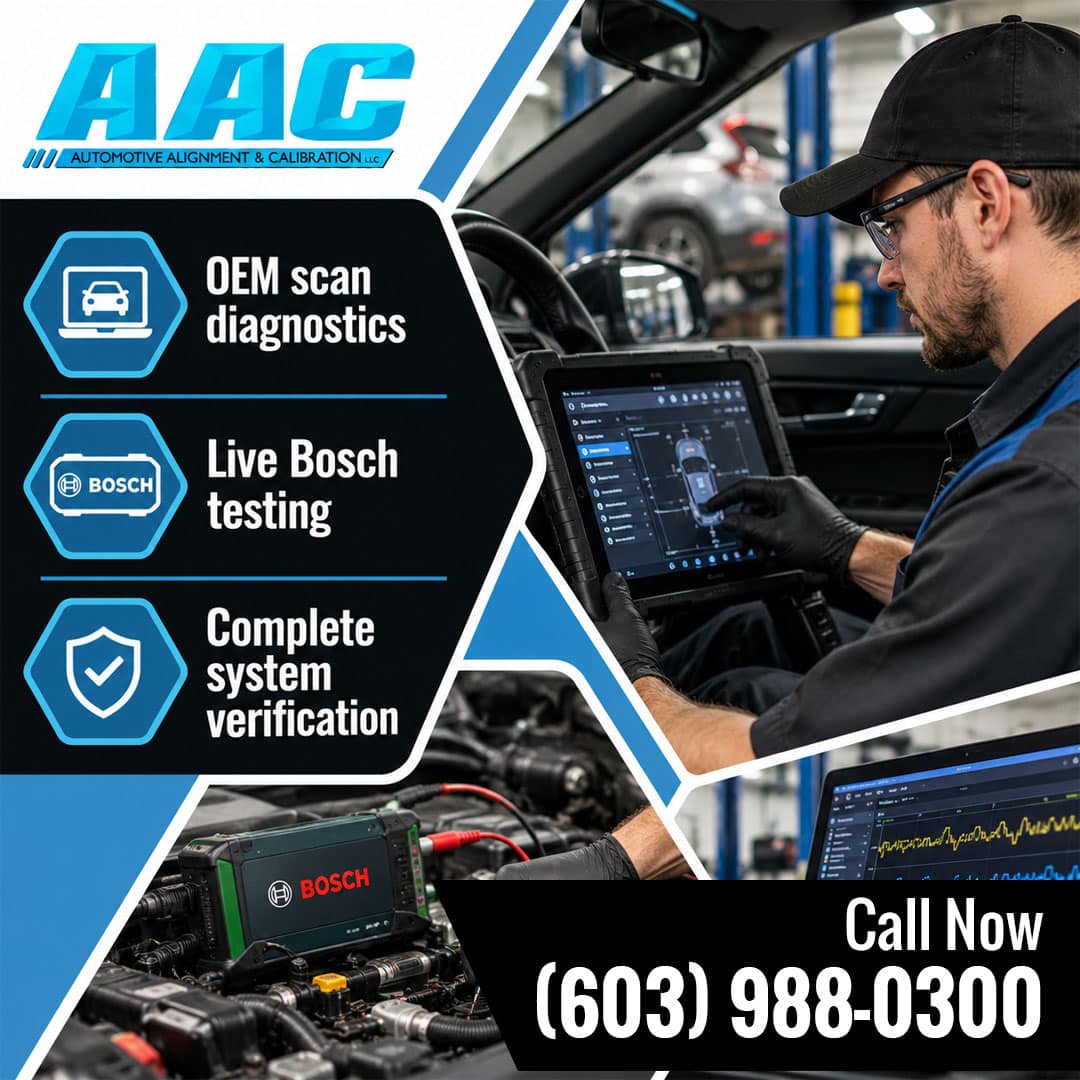
Bosch diagnostic equipment goes beyond basic code reading to test specific vehicle systems in detail. This includes checks on electrical circuits, sensors, and components tied to engine performance. The U.S. Environmental Protection Agency notes that onboard diagnostic checks help show that a vehicle’s emission systems are working correctly. An ASE-certified auto mechanic uses this kind of equipment to support a diagnosis before recommending repairs.
How Do These Tools Work Together During a Visit?
At Automotive Alignments and Calibrations, our technician chooses tools based on the symptoms a vehicle is showing. Here is how the two tools typically compare:
| Tool | What It Checks | Why It Matters |
| OEM scan tool | Fault codes stored in the onboard computer | Points to the specific system involved |
| Bosch diagnostic equipment | Electrical circuits, sensors, and live system data | Shows which component needs attention |
This combination is common at any local mechanic shop that invests in proper equipment.
Why Does This Matter for North Hampton Drivers?
Choosing the right tool changes what a technician can actually see inside a vehicle’s systems. This shows up in a few concrete ways:
- Scan tool data comes directly from the vehicle’s own onboard computer
- Bosch equipment allows testing of live components, not just stored codes
- The technician selects tools based on the specific symptoms reported
Anyone searching for a car mechanic near North Hampton, NH, can ask which diagnostic tools a shop actually uses.
FAQs
- Can a scan tool diagnose every vehicle problem?
A scan tool points to a likely system, but our technician still verifies the cause through further testing.
- Do all repair shops use the same diagnostic equipment?
No, equipment varies widely, which is why it helps to ask a shop directly about their tools.
- Will I receive a copy of the diagnostic results?
We explain the results in plain language and are happy to walk through the fault codes with you.
Ready to Get Your Vehicle Properly Diagnosed?
Reach out to Automotive Alignments and Calibrations at (603) 988-0300 or aacofnh@gmail.com to book your visit.