Vehicle safety depends on how well mechanical systems and electronic controls work together during everyday driving. When wheel angles shift or steering components are adjusted, vehicle behavior changes in ways that are not always visible right away. These changes can affect handling, braking response, and driver assistance features.
At Automotive Alignments and Calibrations, you receive alignment and calibration services designed to address these exact conditions. Wheel alignment in North Hampton, NH, is performed when tire positioning affects straight-line stability or uneven wear becomes noticeable. Steering calibration is carried out when steering angle data no longer match the actual wheel position after repairs or component changes.
ADAS calibration services in North Hampton support vehicles that rely on camera and radar systems for lane guidance, collision alerts, and distance tracking. These systems depend on accurate sensor positioning after windshield work, suspension repair, or alignment adjustments. Each service is handled based on your vehicle’s condition and repair requirements.
What ADAS and Steering Calibration Mean for Modern Vehicles
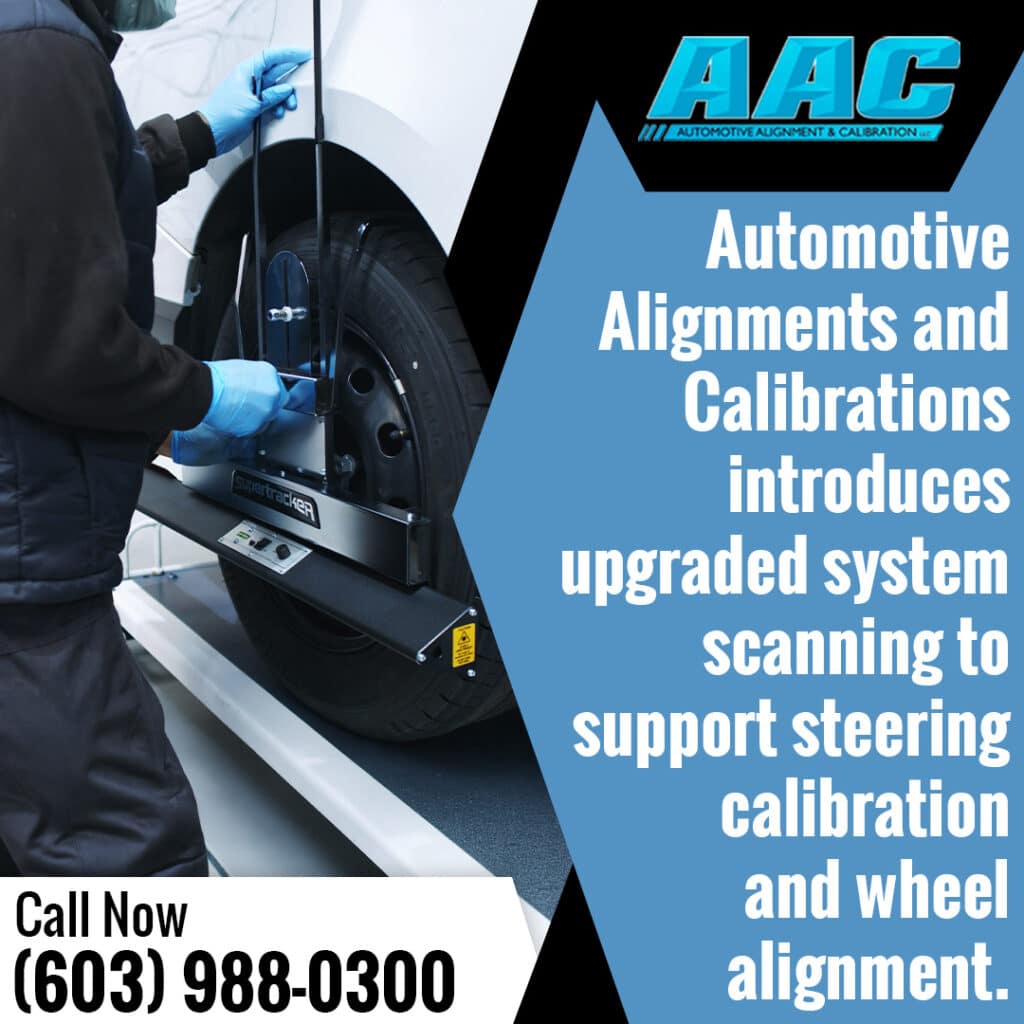
ADAS and steering calibration mean aligning steering angle data and driver assistance sensor readings with real vehicle movement during driving.
At Automotive Alignments and Calibrations, this work connects mechanical adjustments with electronic feedback used by modern safety systems. Wheel alignment often changes steering geometry, which can shift sensor reference points. Steering calibration resets steering angle data after repairs, so vehicle systems read wheel position correctly. ADAS calibration in North Hampton supports camera and radar functions linked to braking and lane monitoring. Alignment and calibration services are performed based on repair conditions and vehicle requirements.
Systems affected include:
- Lane departure warning
- Forward collision alerts
- Electronic stability control
- Adaptive cruise control
Why Alignment And Calibration Systems Work Together
Wheel alignment and calibration work together because wheel position directly influences steering data and sensor readings used by vehicle systems.
At our shop, wheel alignment is checked after steering changes or uneven tire wear. Small shifts in wheel angles affect how vehicle systems interpret movement. Steering calibration corrects steering angle data after mechanical work, so readings match wheel position. ADAS calibration adjusts the camera and radar input after suspension or steering changes.
Conditions affecting both systems:
- Suspension repair that changes ride height
- Tire replacement that shifts wheel positioning
- Steering adjustments that alter center alignment
Wheel Alignment in North Hampton, NH, and Vehicle Handling
Wheel alignment adjusts tire angles based on manufacturer guidelines, where applicable, helping maintain stable driving and even tire wear. It also influences how a vehicle tracks on the road and how the weight spreads across all four tires.
At our shop, wheel alignment is performed after steering changes or uneven tire contact is noticed. Alignment settings directly affect vehicle direction and steering feel during driving.
Key alignment angles include:
- Camber controls inward or outward tire tilt
- The toe manages tire direction during movement
- Caster supports steering return and straight tracking
Steering calibration may follow alignment if steering angle data shifts after service. ADAS calibration may also be needed if sensor readings are affected by suspension or steering changes.
What Causes Wheel Alignment Issues
Wheel alignment changes occur when suspension or steering parts shift from their set positions during driving or repair work. These shifts can affect tire direction and steering response.
At Automotive Alignments and Calibrations, wheel alignment is checked after impacts or services that alter wheel positioning. Wear over time or component replacement can change wheel angles. Steering calibration may be needed after these changes to correct steering angle data.
Common causes:
- Road impact from potholes or uneven surfaces
- Suspension wear over time
- Steering system repairs or part replacement
Steering Calibration In Modern Vehicle Systems
Steering calibration restores or relearns steering angle sensor values so vehicle control modules can accurately interpret steering wheel position following alignment, steering, or suspension-related repairs.
At our shop, it is performed after wheel alignment or steering-related repairs that shift the wheel center position. This process helps align electronic feedback with actual steering input. Alignment and calibration services are used together to correct changes that affect system communication between mechanical parts and onboard modules.
Systems affected include:
- Stability control systems that monitor vehicle balance
- Traction control systems that manage wheel slip
- Lane assistance systems that track road position
ADAS calibration services in North Hampton may follow steering calibration if sensor inputs depend on updated steering data.
ADAS Calibration Services In North Hampton
ADAS calibration verifies and restores manufacturer-specified sensor and camera reference values so driver assistance systems can accurately interpret road conditions and surrounding traffic.
At our shop, ADAS calibration services are performed after repairs that affect sensor alignment, including suspension work, windshield replacement, or wheel alignment. These systems depend on accurate data flow between sensors and vehicle control modules. Alignment and calibration services help restore that communication after mechanical changes.
ADAS systems rely on:
- Lane tracking systems that monitor road position
- Distance measurement systems are used for the following distances
- Collision alert systems that monitor obstacles ahead
The calibration may be performed before ADAS calibration if steering angle data affects system readings.
When ADAS Calibration Is Required
ADAS calibration may be required following repairs that affect sensor positioning, vehicle geometry, or manufacturer-specified calibration conditions.
Our calibration work is carried out after repairs that affect the camera or radar placement. These changes can happen after suspension service, glass replacement, or front-end repairs. ADAS calibration is performed based on the specific system requirements of each vehicle, using diagnostic checks before adjustment.
Common situations include:
- Windshield replacement is affecting camera alignment
- Front-end collision repairs shifting the radar position
- Suspension changes alter ride height
ADAS systems affected include:
- Lane departure warning systems
- Forward collision alert systems
- Blind spot monitoring systems
Incorrect calibration may lead to lane tracking errors, incorrect distance readings, or delayed driver alerts during road use.
Alignment And Calibration Workflow In Repair Operations
Vehicle service follows a structured workflow that starts with diagnostics and moves through inspection, adjustment, and verification.
At our shop, alignment and calibration services may begin with electronic scanning using OEM scan tools and Bosch diagnostic equipment when required by the vehicle and repair procedure. This helps identify steering, suspension, or sensor-related changes before any physical adjustments. Wheel alignment is then measured to review tire angles and road contact conditions. Steering calibration may follow if the steering angle data differs from the wheel position. ADAS calibration services are performed when sensor readings require correction after mechanical work.
Workflow steps:
- Electronic system scan
- Steering and suspension inspection
- Alignment measurement
- Calibration when required
- Final verification checks
OEM And Aftermarket Parts Usage
OEM parts are selected based on insurance coverage and repair needs, while aftermarket parts are used when suitable options match vehicle requirements. This balance supports mechanical repairs and electronic system performance without restricting service options.
At our shop, part selection depends on vehicle condition, insurance approval, and availability. Suspension or steering component replacement may affect wheel alignment and calibration needs. ADAS calibration services can also vary based on sensor-related part changes.
Parts selection factors:
- Insurance coverage terms
- Vehicle system requirements
- Part availability during repair work
Services Provided In North Hampton, NH
We provide wheel alignment, steering calibration, ADAS calibration, diagnostic, suspension, brake, tire, and general mechanical repair services for modern vehicles. Work begins with inspection and diagnostic scanning before adjustments are made based on vehicle condition.
Wheel alignment in North Hampton, NH, addresses steering drift and uneven tire wear. The calibration of steering is performed after steering-related repairs. ADAS calibration services in North Hampton support camera and radar systems affected by mechanical changes.
Services include:
- Suspension repair
- Brake repair
- Tire replacement
- Mechanical diagnostics
- State inspections
- Collision-related towing support
Signs A Vehicle May Require Service
Changes in steering behavior or driver assistance alerts indicate alignment or calibration needs.
We review vehicles showing handling or electronic system changes after driving or repair work. Wheel alignment is often checked when tire direction or road tracking feels uneven. The calibration of the steering may be needed if the steering wheel position shifts after service. ADAS calibration services relate to sensor alerts tied to lane and stability systems.
Driving symptoms:
- Vehicle pulling during straight driving
- Steering wheel off-center
- Vibrations at higher speeds
Electronic indicators:
- Lane assist alerts
- Stability control warnings
- Driver assistance inconsistencies
Why Alignment And Calibration Must Be Performed Together
Mechanical alignment and electronic calibration share connected reference points that affect steering, stability, and driver assistance systems.
At Automotive Alignments and Calibrations, wheel alignment is reviewed alongside electronic system behavior after repairs. Alignment and calibration services link suspension geometry changes with sensor and steering data updates. Steering calibration corrects steering angle differences that affect stability control, while ADAS calibration adjusts sensor readings tied to road tracking.
System relationships:
- Suspension geometry affects sensor accuracy
- Steering position affects stability systems
- Wheel alignment affects driver assistance readings
Service Process At Automotive Alignments And Calibrations
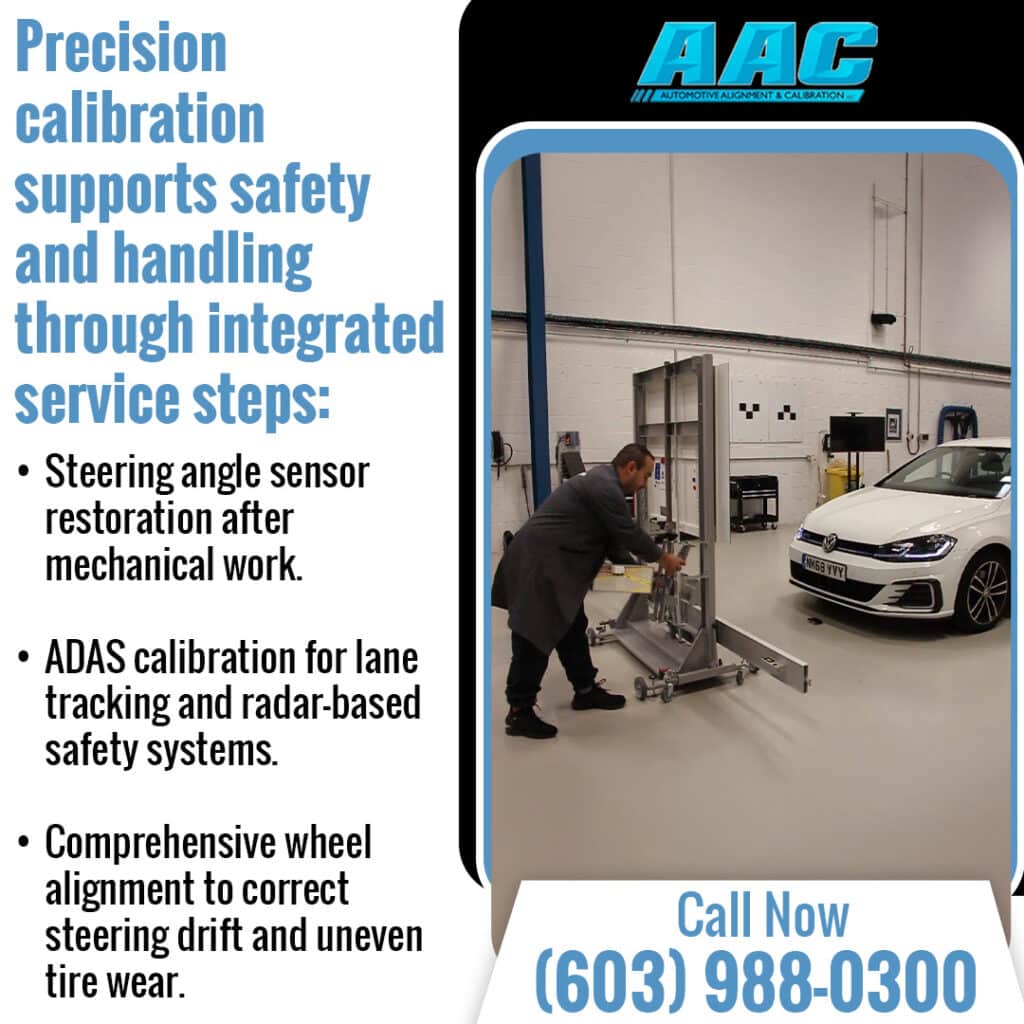
Vehicle service follows a structured process that moves from diagnostics to final system verification.
At our shop, calibration and alignment services begin with diagnostic scanning to identify steering or sensor changes. Wheel alignment is adjusted after a mechanical inspection confirms angle variations. The calibration of the steering may be used to reset steering angle data. ADAS calibration services are performed if sensor readings shift after repairs.
Steps include:
- Diagnostic scanning
- Mechanical inspection
- Alignment adjustment
- Calibration when required
- Final system verification
Schedule Alignment and Calibration Support in North Hampton, NH
Vehicle handling and driver assistance performance rely on accurate wheel angles, steering data, and sensor positioning. After repairs or noticeable changes in driving behavior, calibration and alignment services help restore correct mechanical and electronic communication across systems.
Wheel alignment, steering calibration, and ADAS calibration services in North Hampton are performed based on vehicle condition and repair needs. Automotive Alignments and Calibrations applies alignment and calibration services supported by diagnostic scanning and system verification.
Contact us at (603) 988-0300 or email aacofnh@gmail.com to schedule service or request support.