Drivers in North Hampton often notice small changes in how a vehicle handles before warning lights appear. Uneven tire wear, steering pull, or light vibration usually signal issues in wheel positioning or electronic system accuracy. Understanding the key differences between wheel alignment and ADAS calibration helps you make smarter decisions about your vehicle. Addressing these early helps reduce long-term repair costs and repeated service visits. Drivers who skip these checks often face the kind of damage covered in our guide on how emergency auto repair prevents breakdown damage.
At Automotive Alignments and Calibrations, you receive service focused on correcting these issues through wheel alignment and related system diagnostics. Alignment and calibration services connect mechanical adjustments with electronic requirements found in modern vehicles.
You also depend on steering calibration after alignment work to maintain accurate steering response and stable handling. Vehicles with driver assistance features require ADAS calibration services in North Hampton to keep cameras and sensors aligned with real driving conditions.
When these systems work together correctly, your vehicle operates with improved stability and fewer unexpected repair needs over time.
How does poor alignment increase vehicle costs?
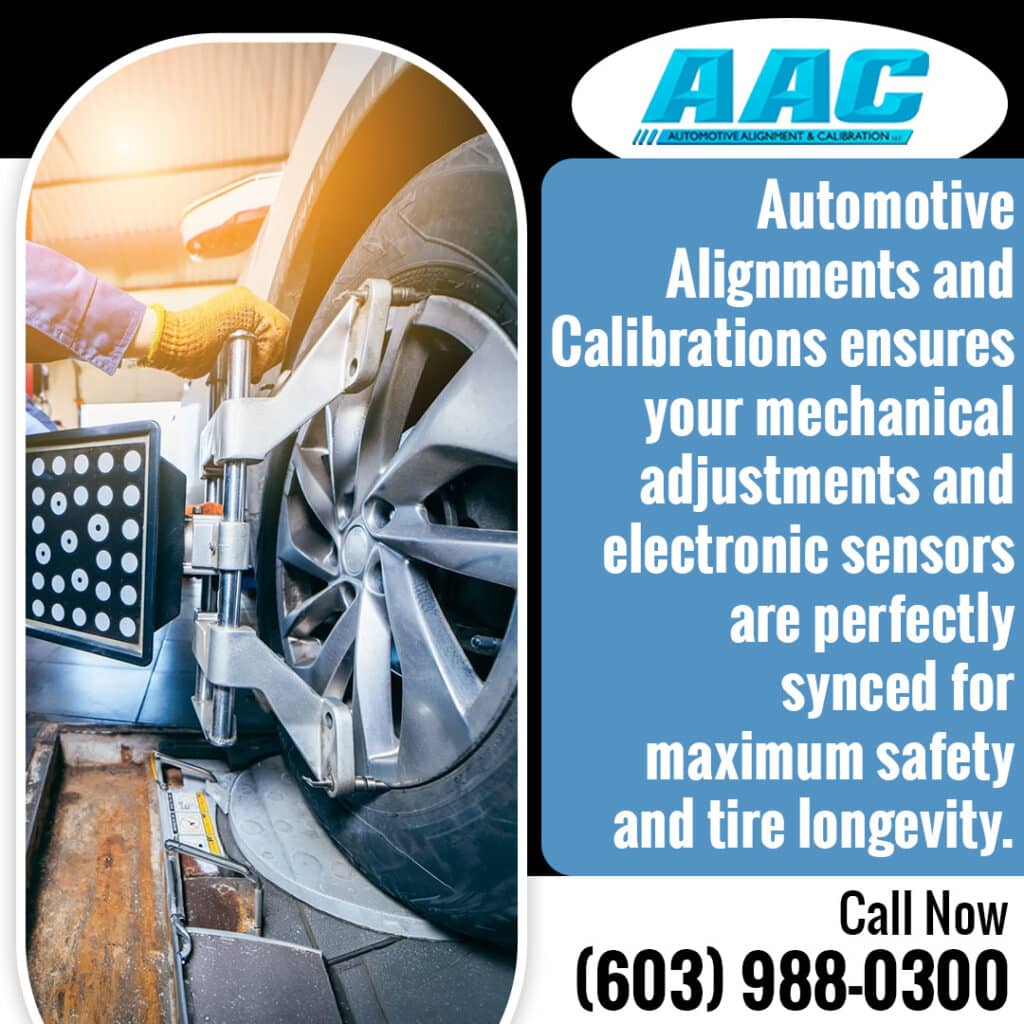
Poor alignment increases vehicle costs through uneven tire wear, added steering effort, and uneven suspension load distribution.
When wheel positioning shifts, the vehicle no longer maintains stable straight-line movement, and response changes become noticeable during highway driving and turns.
How costs build over time
- Tires wear faster on one side, reducing lifespan
- Steering requires constant correction while driving
- Suspension parts carry uneven pressure
These conditions increase strain across connected systems and lead to more frequent repairs and earlier part replacement.
Wheel alignment is performed with diagnostic and adjustment work. Sensor resets and camera or radar recalibration are completed after mechanical work when system data requires adjustment.
What does wheel alignment actually correct?
Wheel alignment corrects suspension angles so tires maintain steady road contact and vehicle movement stays controlled.
During wheel alignment, wheel geometry is adjusted so tire load stays evenly distributed across the road surface. This affects straight-line driving and turning response.
What gets adjusted during service
- Suspension angles reset to manufacturer specifications
- Tire contact points are balanced across all wheels
- Steering response aligned with wheel direction
Alignment and calibration services restore balance between mechanical and electronic systems. Calibration updates steering angle data, while ADAS calibration services in North Hampton are performed after suspension or structural changes affecting sensor alignment.
Why do alignment and calibration services work together?
These services work together because mechanical wheel positioning and electronic systems rely on shared data that supports steering control and safety features. During wheel alignment, physical adjustments change how tires sit on the road while vehicle sensors continue tracking movement in real time.
How systems stay connected
- Steering angle sensors track wheel direction as you drive
- Stability control reacts to changes in wheel movement
- ADAS systems use camera and radar input for road positioning
These systems rely on consistent communication between mechanical settings and electronic readings. When that relationship shifts, steering feedback and safety system responses may not match road conditions.
After suspension or steering repairs, recalibration is often required. Steering calibration adjusts sensor readings to match wheel position. ADAS calibration services in North Hampton correct camera and radar alignment after structural or suspension work. At Automotive Alignments and Calibrations, these services are performed based on vehicle condition and repair needs.
What happens when calibration is skipped after alignment?
Skipping calibration after alignment leads to mismatched sensor data, which affects steering response and safety system readings.
After wheel alignment in North Hampton, NH, the vehicle’s mechanical position changes, but electronic systems may still reference old steering and sensor values. This mismatch creates communication gaps between physical movement and digital input.
What you may notice on the road
- Lane assist may track the vehicle incorrectly
- The steering wheel may not sit centered during straight driving
- Dashboard warning indicators may stay active
These conditions place an extra load on electronic modules and can lead to repeated diagnostic visits.
At Automotive Alignments and Calibrations, calibration and alignment services are paired based on vehicle condition. Steering calibration resets sensor alignment after mechanical work, while ADAS calibration services in North Hampton adjust camera and radar systems so readings match real road positioning.
How does steering calibration reduce repair expenses?
It reduces repair expenses by syncing steering angle sensor data with actual wheel position after mechanical work.
After wheel alignment in North Hampton, NH, sensor values may still reflect previous settings, causing mismatched steering feedback.
Where cost issues start
- Steering angle readings differ from wheel position
- Stability control receives incorrect input
- Alignment results appear inconsistent over time
These issues often lead to repeat visits.
Sensor resets and camera or radar recalibration restore sensor accuracy after mechanical or structural changes.
What role does ADAS calibration play in cost reduction?
ADAS calibration reduces repair costs by restoring camera and radar accuracy after repairs that affect sensor positioning.
After wheel alignment in North Hampton, NH, or suspension work, sensor angles may shift, affecting system readings.
Where cost issues begin
- Camera data misaligns with the lane position
- Radar misreads distance or movement
- Driver assistance responses become inconsistent
These conditions often lead to repeated diagnostics.
Work is reviewed after repairs. Sensor resets and camera or radar recalibration restore sensor data to match vehicle movement.
How do alignment issues affect multiple systems at once?
Alignment issues place uneven load across tires, steering, suspension, and braking systems at the same time.
During wheel alignment, small angle changes affect how each system handles road contact.
How system imbalance develops
- Tires wear unevenly across surfaces
- Steering requires constant correction
- Suspension carries an uneven load
- Brake force varies between wheels
These changes increase wear across multiple components.
The calibration work addresses both mechanical and electronic effects. Sensor resets and camera or radar recalibration are performed when system data no longer matches vehicle movement.
How does Automotive Alignments and Calibrations control repair costs?
Repair costs are controlled through diagnostics, inspection, and repair planning based on vehicle condition before work begins.
During wheel alignment, each vehicle is evaluated using OEM scan tools and Bosch equipment to identify mechanical and electronic issues.
How repair costs are managed
- Diagnostics completed before repair work
- OEM parts used whenever possible based on insurance
- High-quality aftermarket parts used when appropriate
- Repair steps explained before approval
Sensor resets and camera or radar recalibration are performed when system data changes after repairs.
Why do North Hampton driving conditions affect alignment wear?
Road conditions and seasonal changes in North Hampton, NH, increase stress on wheel alignment and suspension components.
As you drive daily, surface irregularities and weather shifts gradually affect how your vehicle maintains wheel position. This increases the need for wheel alignment to maintain stable handling.
What contributes to alignment wear
- Road surface damage alters suspension angles
- Temperature changes affect component positioning
- Moisture and road treatments increase part wear
These factors influence both mechanical alignment and sensor readings.
Alignment work is performed based on wear patterns. Steering calibration follows alignment changes, while ADAS calibration services are completed when sensor positioning is affected.
How alignment and calibration services reduce long-term expenses
It reduces long-term expenses by supporting even tire wear and lowering stress across steering and suspension systems.
When you schedule wheel alignment in North Hampton, NH, the adjustment helps your vehicle maintain balanced road contact. Over time, this reduces wear patterns that lead to early replacements and repeated repairs.
Where cost savings develop
- Tires wear evenly, extending usable life
- Suspension components carry a balanced load
- Steering systems require fewer corrections
- Fuel use stabilizes due to reduced resistance
These improvements reduce how often parts need replacement.
At Automotive Alignments and Calibrations, alignment and calibration services are completed based on vehicle condition. Steering calibration follows alignment work when needed, and ADAS calibration services in North Hampton are performed when sensor positioning changes after repairs.
Why modern vehicles require both alignment and calibration
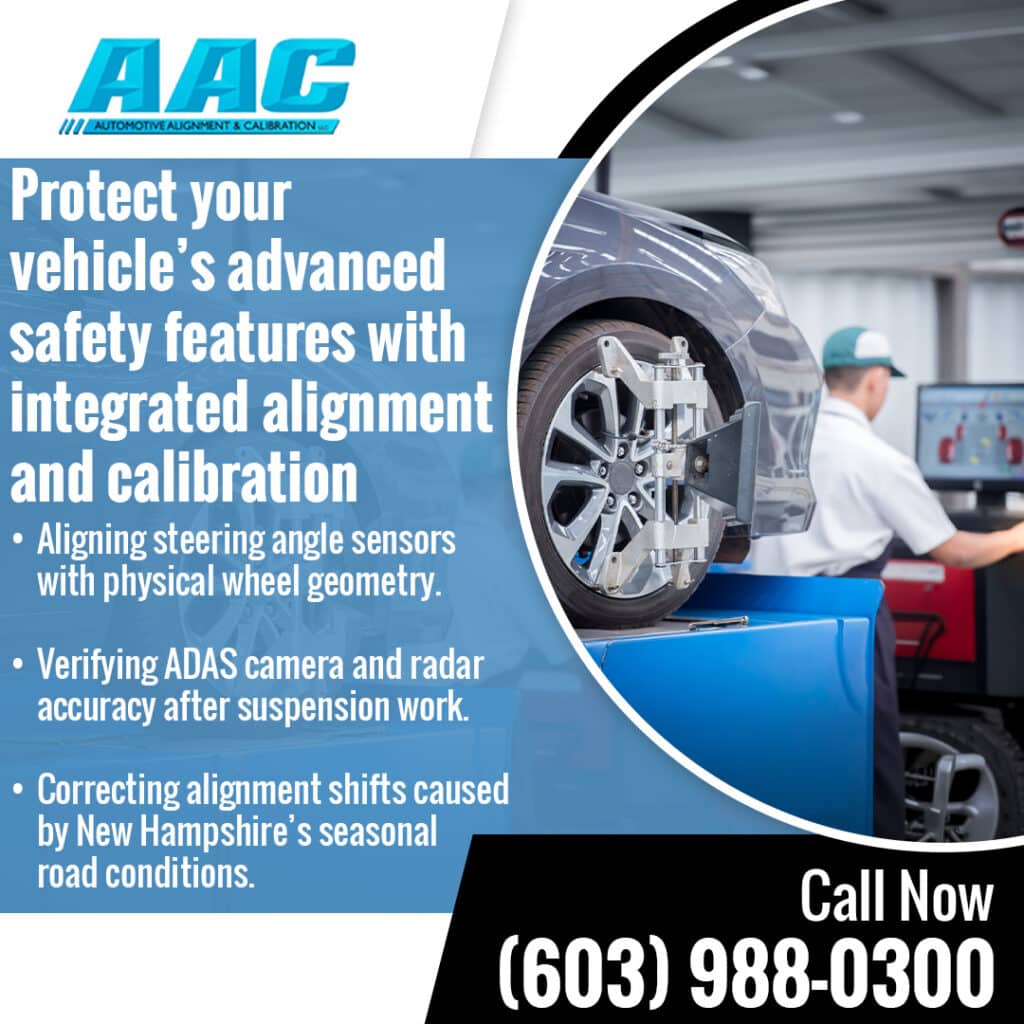
Modern vehicles require both alignment and calibration because electronic systems depend on accurate mechanical positioning data.
After wheel alignment, physical adjustments change wheel position, but onboard systems may still rely on previous sensor values.
How systems depend on alignment data
- Steering sensors track wheel position
- Stability control responds to steering input
- ADAS systems use camera and radar positioning
Work is performed based on vehicle condition. Sensor resets update steering data, and camera or radar recalibration is completed when system readings no longer match vehicle movement.
How service workflow affects repair reliability
A structured service workflow improves repair reliability by linking diagnostics, mechanical alignment, and system calibration in a clear sequence.
When you schedule wheel alignment in North Hampton, NH, each step follows a defined process to reduce repeat adjustments.
Service workflow steps
- Diagnostic scanning using OEM tools
- Wheel and suspension measurement
- Mechanical alignment correction
- Steering calibration reset
- ADAS recalibration when required
At Automotive Alignments and Calibrations, alignment and calibration services follow this process. ADAS calibration services are completed based on repair needs and system response.
Schedule Your Vehicle Inspection and Service Today
Your vehicle often gives early signs before larger repair needs develop. Changes in steering response, uneven tire wear, or system alerts usually point to alignment or calibration concerns that should not be delayed. Addressing these conditions early helps reduce repeated repair work and keeps vehicle systems functioning consistently.
At Automotive Alignments and Calibrations, service begins with a detailed inspection based on vehicle condition and diagnostic results. Each step focuses on identifying whether the concern is mechanical, electronic, or a combination of both. This approach supports accurate repair decisions without unnecessary work.
To schedule an appointment, contact the shop at (603) 988-0300 or email aacofnh@gmail.com. Our team is available to review your vehicle needs and arrange the appropriate service based on inspection findings.